The assumption that any bilingual person can navigate a courtroom is one of the most dangerous myths in the justice system. It’s a high-stakes gamble that risks livelihoods, liberty, and the very integrity of a legal proceeding.
When an individual with Limited English Proficiency (LEP) faces the court, their entire understanding of the process—and their ability to be understood—is filtered through a third party. If that filter is unqualified, the consequences are immediate and often irreversible.
Beyond Fluency: What "Certified Interpreter" Actually Means
There is a vast, critical difference between speaking two languages and being a professional legal interpreter. The "certified" designation is not a mere formality; it is a hard-won credential that guarantees a specific, high-level skill set.
To earn certification, interpreters undergo a grueling examination process. They are tested not only on their immediate recall and vocabulary in both languages but also on:
Dense Legal Terminology: They must have an immediate command of "terms of art"—complex legal jargon, Latin phrases, and procedural language that have no simple, direct equivalent.
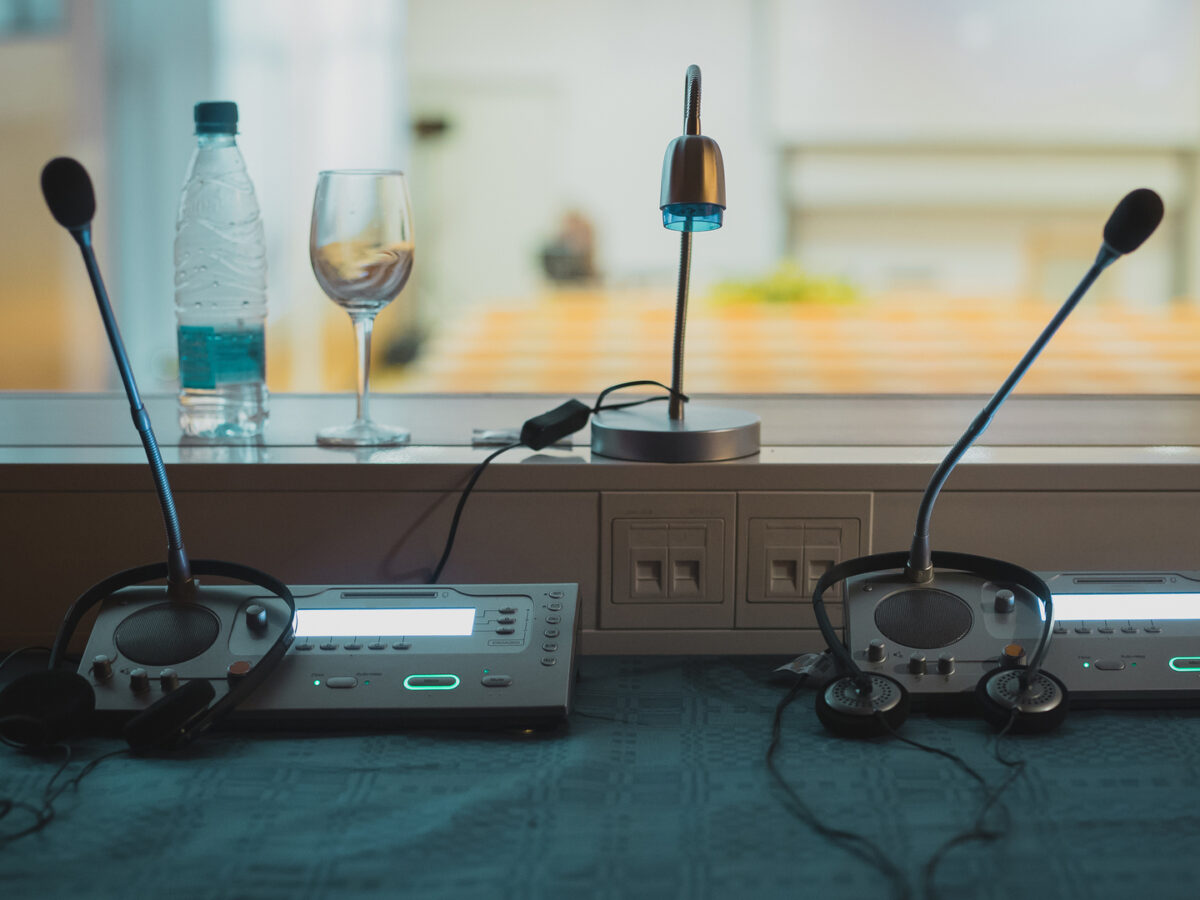
Modes of Interpretation: They must be flawless in all three required modes: simultaneous (interpreting in real-time), consecutive (interpreting after a pause), and sight translation (verbally translating a document on the spot).
The Ethics of Neutrality: This is perhaps the most crucial element. A certified interpreter is bound by a strict code of ethics. They cannot "help" the defendant, soften harsh testimony, summarize a judge's orders, or add their own clarifications. They must be an invisible, impartial conduit, transferring the exact meaning, tone, and register of the speaker.
A family member or friend simply cannot do this. Their instinct is to protect, help, or editorialize. A certified professional’s instinct is to be precise.
The Real-World Cost of "Saving Money" on an Interpreter
So, what happens when a court relies on an ad-hoc or unqualified interpreter? The entire case is built on a foundation of sand.
The most immediate risk is a corrupted legal record.
Imagine a witness gives hesitant, ambiguous testimony. A well-meaning (but unqualified) friend interpreting for them might "clean it up" to make them sound more confident. Conversely, they might misunderstand a complex question about legal rights and provide a simple "yes" or "no" answer.
This isn't a minor error; it's a fundamental violation of due process.
The U.S. Department of Justice has identified over 25 million individuals as having Limited English Proficiency. For this massive population, a bad interpretation can lead directly to:
Invalidated Pleas: A defendant agrees to a plea bargain they did not truly understand.
Grounds for Appeal: A conviction is challenged—and often overturned—because the defendant's right to be present and understand the proceedings was violated.
Costly Mistrials: A judge, recognizing the record is hopelessly compromised, may be forced to declare a mistrial, voiding the entire proceeding and forcing everyone to start over.
When the stakes are this high, accuracy isn't just important; it's the only thing that matters.
Where Experience Becomes Your Safeguard
Ultimately, the choice of an interpreter is a critical legal decision, not a minor administrative task. It is an investment in the validity of the case itself. You are not just hiring a linguist; you are hiring a specialist trained for the unique pressures of the judicial environment.
This is precisely the area where true expertise is non-negotiable. Artlangs Translation, for example, has built its reputation on navigating these high-stakes environments for years. With a deep bench of specialists covering over 230 languages, they understand what is on the line.
Their experience isn't just in simple translation; it's in the specialized work that modern legal cases demand—from providing video localization for depositions and handling multilingual data transcription for e-discovery, to adapting sensitive audio evidence like short dramas or audiobooks for judicial review. They bring a level of seasoned experience that ensures when every word counts, yours is heard correctly.