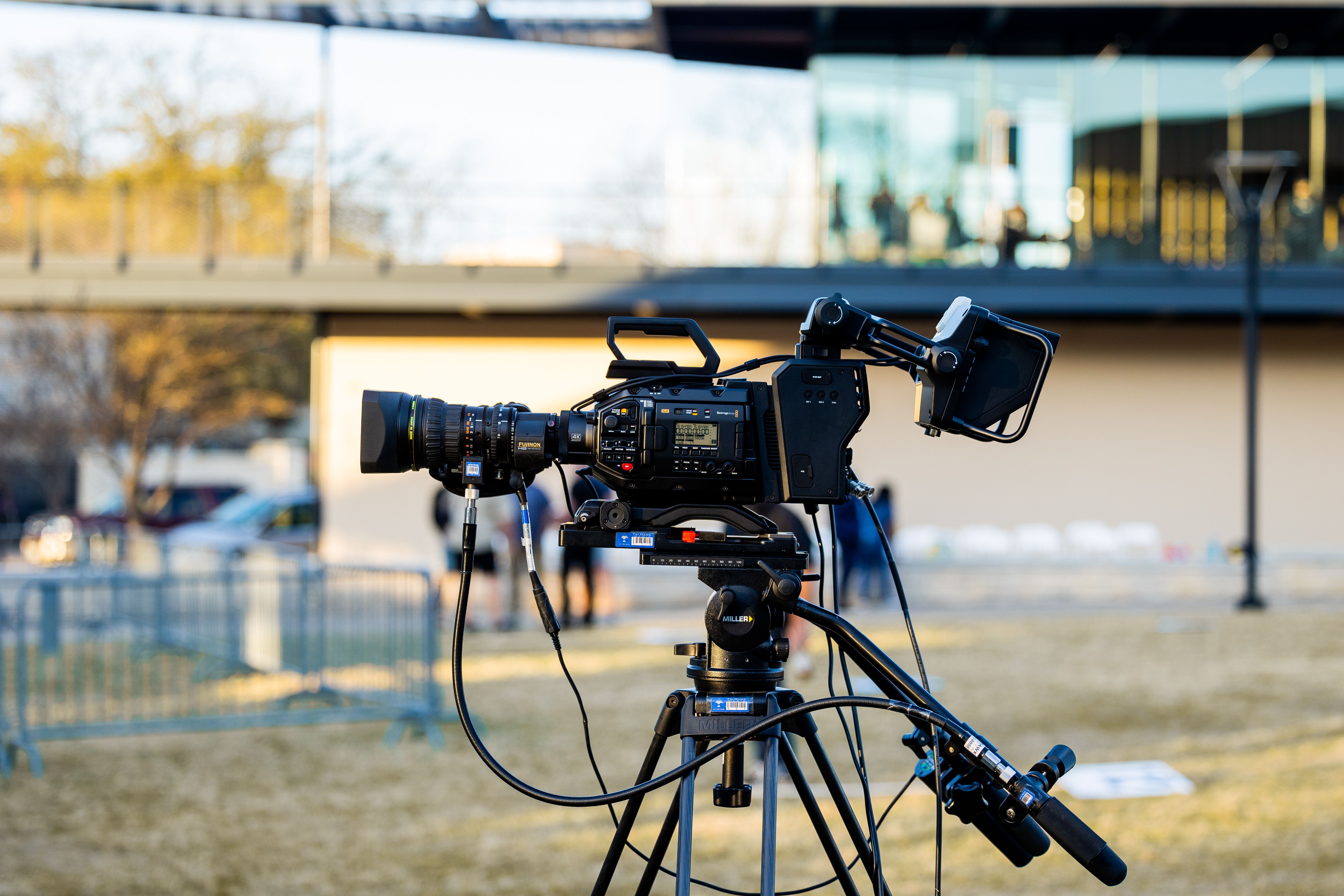
Traditional film and television crews know how to make audiences lean in. They understand pacing that builds tension across three acts, dialogue that lands with emotional weight, and production values that survive the big screen. Short dramas demand something different: episodes that hook in the first five seconds, cliffhangers every 90 seconds, and stories that travel across languages without losing their pull. When those two skill sets meet, the results can be striking—if the translation and localization keep pace with the storytelling craft.
The short-drama format has grown from a regional experiment into a serious global business. Outside China, the market reached roughly $1.4 billion in 2024 and is projected to hit $9.5 billion by 2030, according to Media Partners Asia. Omdia puts total global micro-short drama revenue at about $11 billion in 2025, with further growth expected. In the United States alone, platforms are tracking toward $1.3–1.5 billion in a single year. Viewers, particularly women aged 30–60 drawn to romance, revenge, and high-stakes personal stories, are paying. Downloads in Southeast Asia and Latin America have surged. The format rewards speed and volume, yet the titles that sustain attention and drive higher average revenue per user tend to feel native rather than imported.
That is where many traditional teams hit friction. A polished script written for a 45-minute episode does not automatically work when cut into 60- or 90-second vertical installments. Literal translation often flattens humor, softens emotional peaks, or leaves cultural references that land awkwardly. Subtitles that ignore reading speed on a phone screen create drop-off. Dubbing that ignores lip movement or vocal texture breaks immersion. Industry observations repeatedly point to weak localization as a primary reason cross-border titles underperform. One widely cited benchmark suggested culturally attuned work can lift retention by around 35 percent—enough to move a mid-tier title into stronger chart positions.
The cost-quality tension is real. Pure machine translation plus basic text-to-speech is cheap and fast, but the robotic delivery and mismatched tone show up quickly in completion rates. Full cinematic-style human dubbing with native talent, careful direction, and post-production polish delivers the emotional texture audiences expect from premium short dramas, yet it multiplies budgets and stretches timelines. Traditional teams already carry higher production costs than pure short-drama factories; adding localization as an afterthought can erase the margin advantage of the format.
The practical path sits between the extremes. Film-trained writers and directors bring an instinct for emotional architecture that pure volume producers sometimes lack. When that instinct is paired with localization specialists who treat dialogue as performance rather than word substitution, the output improves. Dialogue is rewritten for natural speech rhythms in the target language. Cultural references are adapted or replaced so they trigger the same emotional response. Voice direction focuses on the same intensity and vulnerability that the original performance carried. Lip-sync and timing are handled as craft, not afterthought. Platforms such as ReelShort have invested in local writers and adaptation for English-speaking markets precisely because audiences reward content that feels written for them. DramaBox and others have shown that broader language coverage combined with regional cultural calibration opens Southeast Asia and Latin America more effectively.
Real-world outcomes support the approach. Titles that received dialogue refresh and slang updates for English-speaking markets have posted retention gains above 40 percent in some documented cases. Spanish adaptations with targeted dubbing have driven multi-million download surges in Latin America. These are not isolated experiments; they reflect a pattern in which localization quality correlates with willingness to pay and continued viewing.
Speed remains non-negotiable. A 50-episode series that takes six to eight weeks to localize loses the window. Teams that can move a season into five languages inside 15–20 business days keep pace with the release cadence the format rewards. Hybrid workflows—machine assistance for first drafts and volume, followed by native human polish, cultural review, and performance-directed recording—help close the gap without discarding quality.
Traditional teams already know how to protect story integrity under pressure. Applying that same discipline to the language layer turns short dramas from disposable content into portable entertainment that travels. The difference shows up in retention curves, in-app purchase rates, and the ability to expand into new markets without constant creative restarts.
Artlangs Translation has spent more than two decades refining exactly this kind of work across 230-plus languages. With a network of over 20,000 professional linguists and a track record of successful video localization, short-drama subtitle adaptation, multilingual dubbing for short dramas and audiobooks, game localization, and large-scale data annotation and transcription, the company has supported producers moving from traditional formats into the high-velocity short-drama space. The combination of film-level attention to emotional detail and the operational capacity required for rapid multi-market releases continues to prove useful for teams that refuse to treat language as an afterthought.