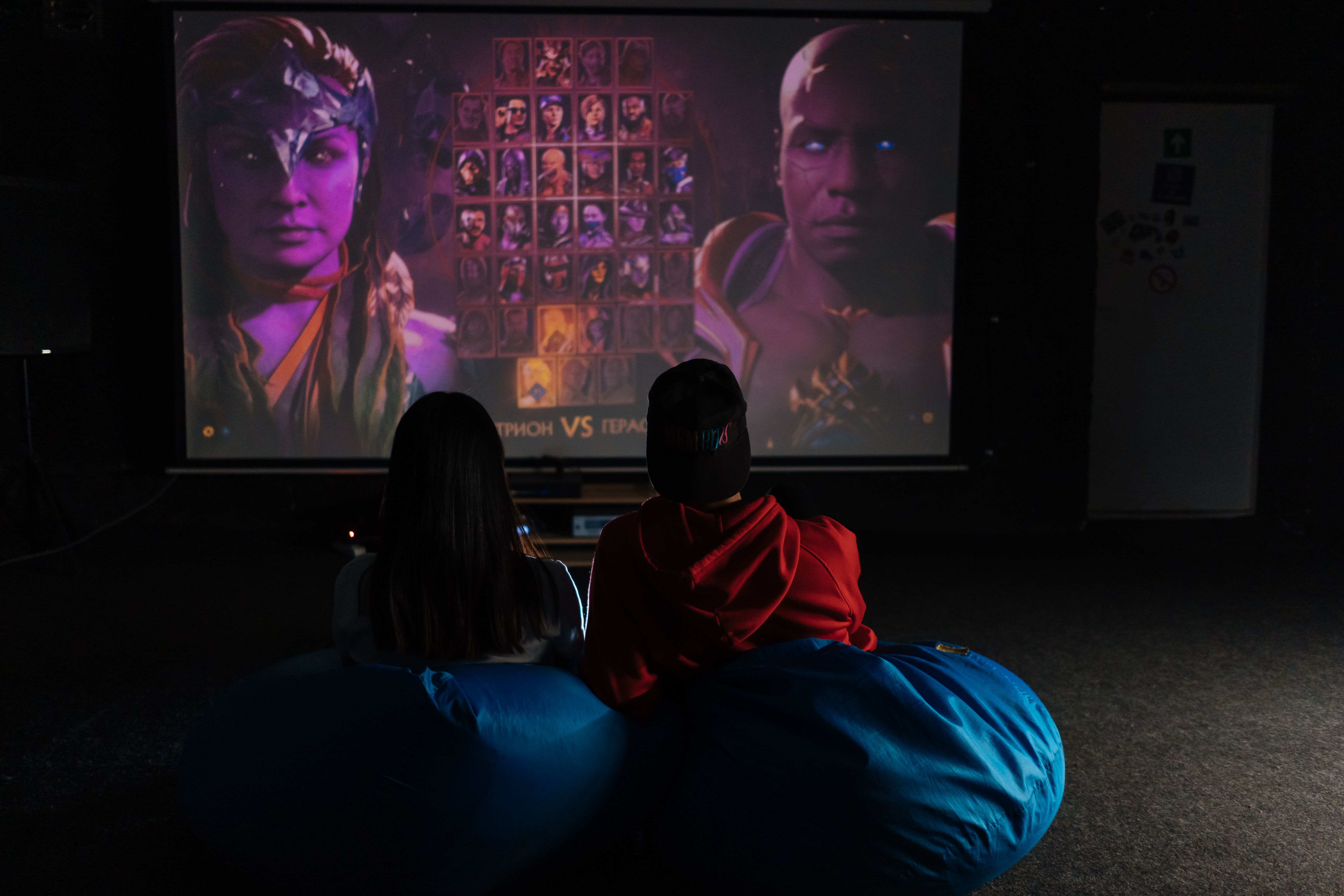
Players abandon games for reasons that have nothing to do with core mechanics. A quest objective that suddenly makes no sense. Dialogue that feels stiff or culturally off. UI text cut off mid-word or replaced by blank squares. These problems surface only after translation lands in the actual build, and they hit hardest in markets outside the original language. Localization Quality Assurance, or LQA, exists to catch them before release.
LQA is the stage where native-speaking testers load the localized build and play through it the way real players will. They examine every string in its living context—menus, tooltips, tutorials, branching dialogue, system messages—rather than reviewing isolated text files. The process typically moves through preparation, in-game testing, structured bug reporting, and regression checks after fixes. Teams share style guides, glossaries, character notes, and debug commands so testers can reach hard-to-trigger content efficiently. The goal is simple: make the game feel native rather than translated.
This step earns its reputation as the last mile of game globalization for a practical reason. Translation and proofreading can produce clean files. Implementation can succeed on a technical level. Yet only in-context play reveals whether a line fits the moment, whether text expansion breaks the layout, or whether a mission instruction now leads players into a dead end. Industry observers note that international markets drive a large share of revenue for many titles. Newzoo projects the global games market at $213.9 billion in 2026 with roughly 3.7 billion players worldwide. Skipping or rushing LQA risks turning that opportunity into negative reviews and higher early churn in key regions.
Common localization bugs fall into recognizable patterns. Text overflow and truncation rank high. English is compact; German, French, Russian, and many other languages expand noticeably, often by 20–40 percent on short UI strings. Buttons sized for “Continue” cut off longer equivalents. Fixed containers force wrapping or clipping that looks unfinished. The practical fix starts earlier than most teams expect: design flexible layouts, share character limits with translators, and run pseudo-localization tests that inflate strings before real translation begins.
Font and glyph failures create another frequent category of problems. A typeface that handles Latin characters cleanly may lack coverage for CJK scripts, Cyrillic, Arabic, or accented characters. The result is the familiar “tofu”—empty rectangles or question marks where readable text should appear. Encoding mismatches produce similar visual corruption. These issues are preventable when teams verify font support for every target script and maintain consistent Unicode handling across the pipeline.
Contextual and meaning errors prove subtler and often more damaging. A word that works in isolation can fail once placed in a scene. Gendered language, formality levels, character voice, or quest logic that depends on earlier lines can all go wrong without screenshots, gender notes, or variable descriptions. Critical mission instructions that mislead players create progression blockers. Native testers catch these because they experience the string the same way a player will and can propose natural alternatives. Real-world examples illustrate the cost. When Darkest Dungeon launched its initial Korean localization, players reported translations that ranged from nonsensical to immersion-breaking. The studio issued public apologies, investigated, and replaced the work after community backlash and review pressure. Cases like this show how quickly linguistic problems become reputation problems.
Automation has changed the economics of thorough LQA without replacing human judgment. Technical checks—string presence, overflow detection, font rendering, layout integrity—lend themselves to scripts and continuous-integration pipelines. Pseudo-localization runs early and often. Visual validation tools can capture screenshots of every string in context and feed them into localization platforms for review. Rovio demonstrated the impact on Small Town Murders. By building a Unity script that automatically generated in-game screenshots and pushed them into their localization platform, testers moved from checking roughly 250 strings per day through full playthroughs to around 1,000 strings per day. The fourfold speed increase allowed consistent LQA coverage within tight update cycles. Similar approaches now appear across studios that combine automated technical validation with focused human review of linguistic and cultural quality.
The combination works because the two layers address different risks. Automation clears the measurable, repetitive issues at scale. Native testers then concentrate on tone, cultural fit, natural flow, and the kinds of logic gaps that only appear during actual play. Teams that treat LQA as an integrated part of the pipeline rather than a final scramble report fewer post-launch patches and stronger player retention in new markets.
Effective practice looks consistent across regions even as specific language challenges differ. Provide testers with complete context and debug tools. Separate the people who translated from the people who test. Log bugs with screenshots, reproduction steps, severity, and suggested fixes. Run at least one focused regression pass after implementation. Credit the testers who catch the problems players never see. These habits scale from indie titles shipping a handful of languages to large multi-platform releases covering a dozen or more.
Studios that treat LQA as optional often discover the real cost only after launch, when store reviews, forums, and social channels fill with complaints about broken immersion. Those that invest early find that the same process improves future content: glossaries stabilize, UI patterns mature, and the feedback loop shortens. In a market measured in hundreds of billions of dollars and billions of players, the difference between a game that feels imported and one that feels made for the local audience is rarely the original design. It is whether anyone checked the words in the place where players actually encounter them.
Artlangs Translation supports this final quality layer with more than twenty years of specialized experience across translation, video localization, short-drama subtitle work, game localization, multilingual dubbing for short dramas and audiobooks, and multilingual data annotation and transcription. The company works with over 20,000 professional linguists and covers more than 230 languages, applying the same in-context testing discipline that protects player experience on titles released worldwide.