When innovators push their inventions into foreign markets, the smallest translation slip in a patent claim or technical description can unravel everything. Patent offices reject applications over vague wording, inconsistent terminology, or missed nuances that no machine translation can catch. Companies worry about more than lost time and fees—they fear compromised trade secrets and weakened legal protection that leaves competitors free to copy.
These aren’t hypothetical risks. A Steinbeis Institute study found that 81% of IP professionals have encountered translation errors in patent work, with more than one in four cases causing serious damage to an applicant’s ability to secure protection. Another 58% described such mistakes as a “latent risk” to entire international portfolios.
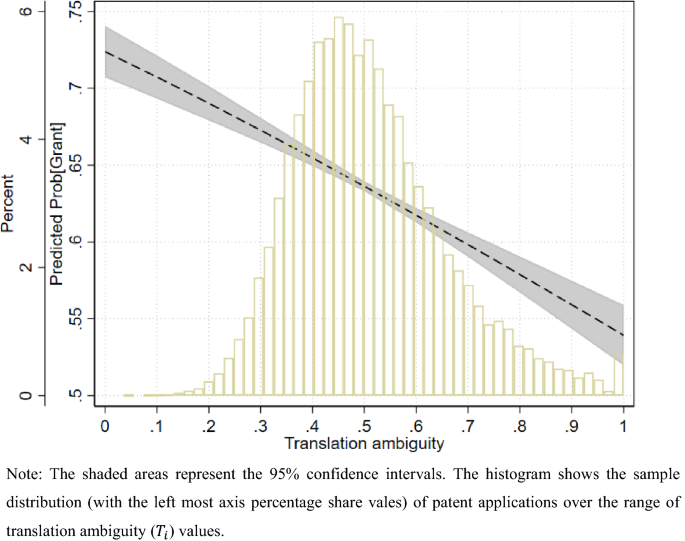
The data is clear: higher translation ambiguity directly lowers the probability of a patent being granted. That single insight explains why businesses no longer treat patent translation as a simple language task—they treat it as a core part of IP strategy.
At the same time, the volume of cross-border filings keeps climbing. The World Intellectual Property Organization reported a record 3.7 million patent applications filed worldwide in 2024, up 4.9% from 2023 and marking the fifth straight year of growth.
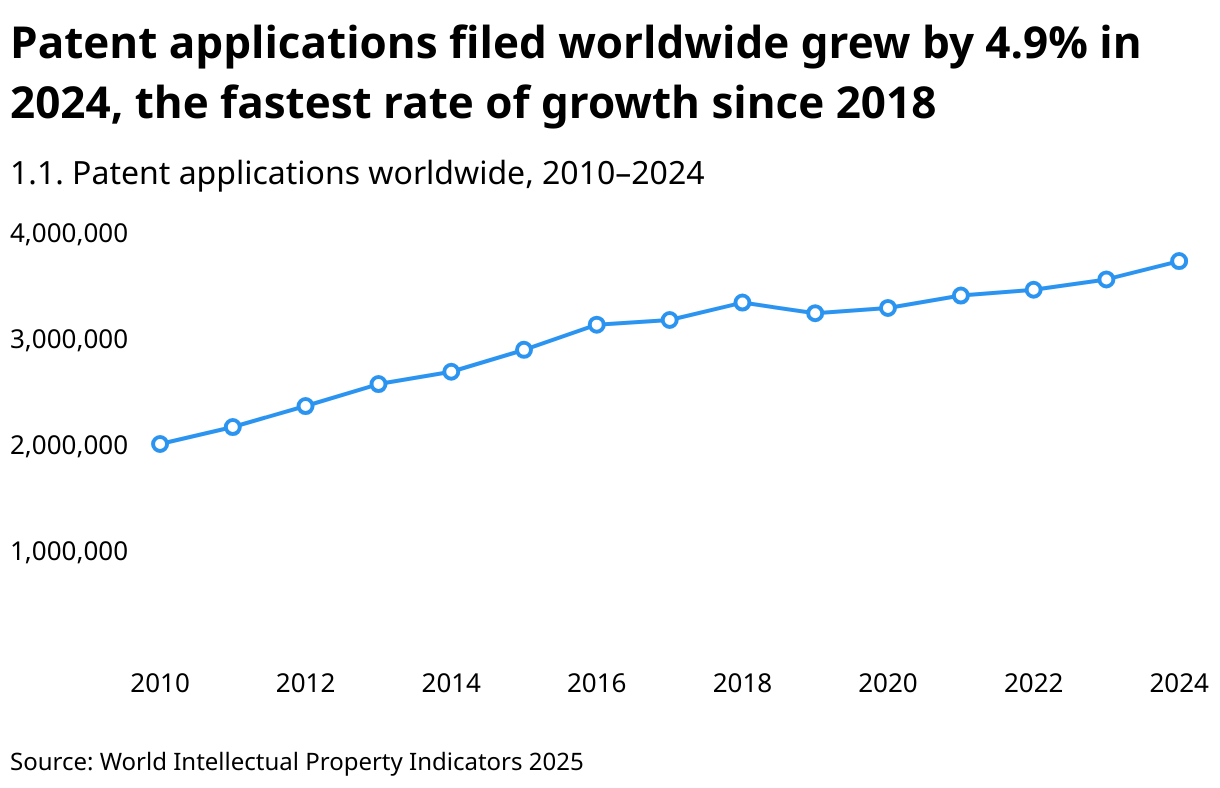
Asia alone accounted for 70% of those filings, meaning most companies now need accurate translations into multiple languages just to protect their core assets. With numbers like these, the question isn’t whether you need professional multilingual IP services—it’s how to choose the right partner before a single mistranslated term triggers a rejection under USPTO 35 U.S.C. 112 or equivalent rules at the EPO or national offices.
What actually separates a reliable patent translation company from the rest
1. Genuine subject-matter expertisePatents aren’t general documents. A biotech claim describing CRISPR editing or an AI algorithm for image recognition demands translators who hold advanced degrees or years of industry experience in that exact field. They must understand not only the science but how examiners at WIPO, USPTO, or CNIPA interpret every term. Generalist agencies or automated tools simply cannot deliver the precision required; the result is often indefiniteness rejections or narrowed claim scope that kills commercial value.
2. Rigorous, multi-layer quality controlTop-tier providers never rely on a single translator. The process includes:
Initial translation by a native-speaking expert in the target jurisdiction
Independent review by a second linguist for linguistic accuracy
Technical validation by a domain specialist
Final legal sign-off to ensure compliance with local patent drafting conventions
Each layer catches issues that would otherwise surface only during examination—often too late to fix without adding “new matter.”
3. Iron-clad data security and strict NDAsYour patent application contains proprietary formulas, manufacturing processes, and future product roadmaps. Any leak could destroy competitive advantage. Professional patent translation companies operate on encrypted platforms, enforce comprehensive non-disclosure agreements with every team member, and maintain ISO 27001-level security certifications. They also provide audit trails so you know exactly who accessed your files and when.
These three elements—expertise, layered quality control, and unbreakable confidentiality—form the non-negotiable baseline. Anything less exposes your IP to rejection or theft.
How to evaluate providers before you commit
Ask direct questions:
Can you show translators’ credentials in my specific technology area?
What is your exact quality-control workflow and how many eyes review each document?
How do you handle file security and what happens if a breach occurs?
Have you supported PCT national-phase entries in the jurisdictions I target, and can you share redacted success stories?
The best partners treat these questions as routine because they’ve answered them hundreds of times for Fortune 500 companies and innovative startups alike.
When your international patent strategy depends on zero-margin-for-error translation, you need a provider that combines deep technical knowledge with bulletproof processes. Artlangs Translation has earned its place among the top patent translation companies by delivering exactly that standard. Proficient across more than 230 languages and backed by years of focused work in specialized translation, video localization, short-drama subtitle localization, game localization, audiobook multilingual dubbing, and multilingual data annotation and transcription, Artlangs brings proven case studies and unmatched practical experience to every IP project. Your innovations deserve nothing less.