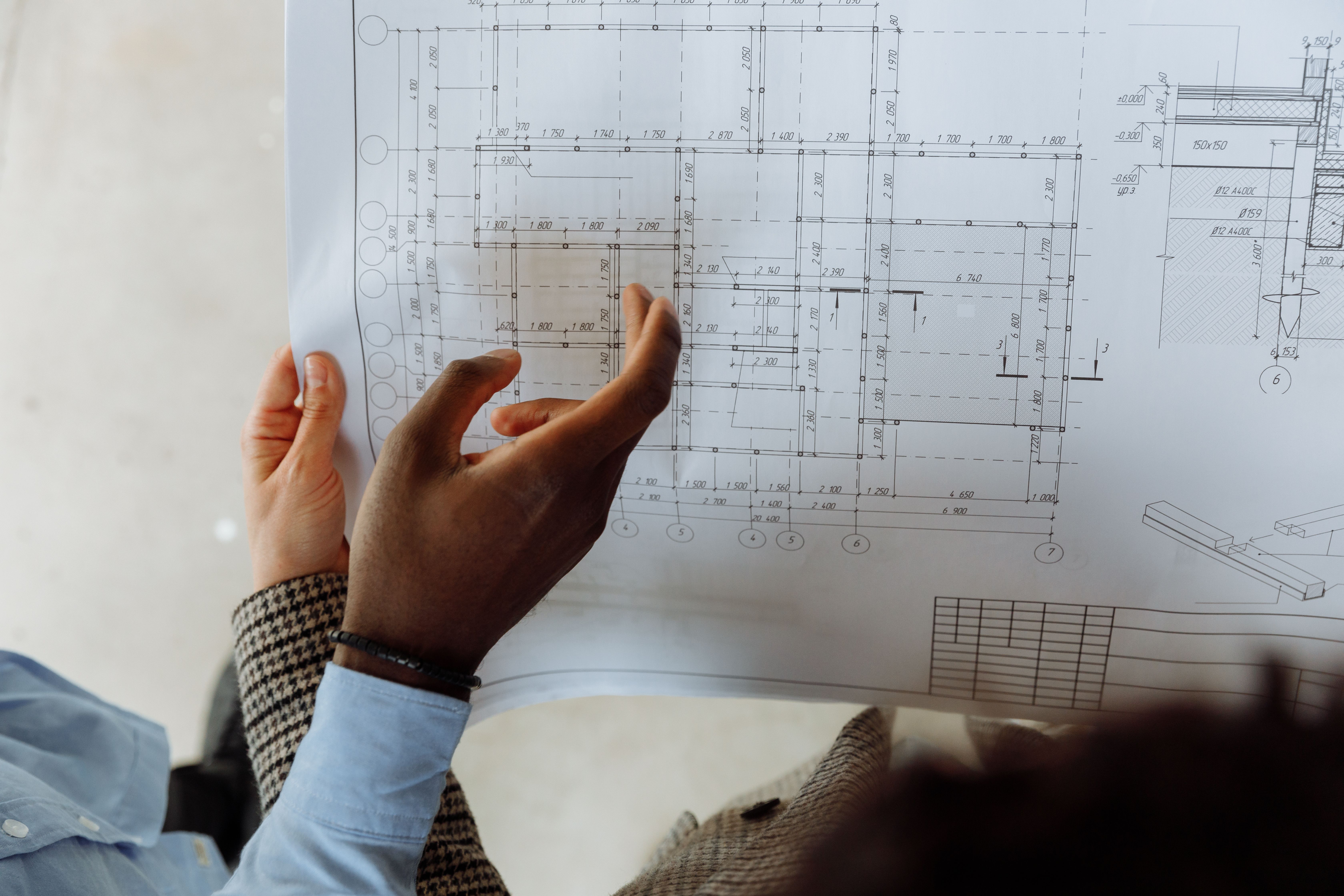
An Office Action lands in the inbox. The shortened response window is usually three months from the mailing date—six months absolute under U.S. statute—and missing it means abandonment. For a Chinese R&D team or in-house counsel working with overseas attorneys, the first barrier is rarely the legal strategy. It is the text itself: dense examiner arguments, cited prior art, claim rejections, and technical language that must be grasped completely and immediately.
That is the practical pain point. Time is short, the official rebuttals are opaque without precise translation, and every day spent decoding language is a day not spent preparing a substantive reply.
Why Ordinary Translation Falls Short
Patent examination documents are not ordinary technical writing. An Office Action from the USPTO (or CNIPA, EPO, JPO) interweaves legal conclusions with highly specific claim language and references to prior-art documents. Comparison files—those cited references—often arrive as full patents or publications in another language. A single ambiguous rendering of a claim transition (“comprising” versus a closed construction), a technical term, or a numerical limitation can shift the perceived scope of rejection or the strength of a prior-art attack.
Research on international patent filings has quantified the downstream effect. Applications whose original English claims contain higher levels of lexical ambiguity show grant rates in China, Japan, and South Korea that are lower by as much as 25 percentage points once translated. Courts have already demonstrated the reverse risk: in the Federal Circuit’s IBSA Institut Biochimique decision, an Italian priority document’s “semiliquido” rendered as “half-liquid” rather than “semi-liquid” led to indefiniteness and invalidation. European opposition proceedings over EP2022349 turned in part on whether a Chinese term for a porous structure had been correctly rendered as “perforated” or “porous,” with added-matter objections following attempted corrections.
Machine translation has improved, yet Japanese Patent Office evaluations of claim and examination-document translation still record frequent residual errors in terminology consistency, omissions, and scope-altering mistranslations—especially in independent claims. Human post-editing by subject-matter specialists remains essential when the output will guide claim amendments or attorney arguments.
Practical Steps That Compress the Timeline
Speed and precision are not opposites when the workflow is designed for patents.
Start with a dual-track approach. One linguist with patent experience produces a full, literal rendering of the Office Action and the key cited passages. A second specialist—ideally a native speaker of the target language who also works regularly with patent attorneys—reviews solely for claim-scope fidelity and consistency of defined terms. This parallel process routinely cuts calendar time compared with sequential review.
Terminology management is non-negotiable. Build or update a project-specific glossary before the first draft: claim transitions, key technical nouns, and any terms of art that appear in both the application and the cited art. Consistency across the Office Action translation and the comparison-document excerpts prevents the very “same word, different rendering” problem that later creates examiner or court confusion.
Prioritize the rejection grounds and the independent claims first. Dependent claims and secondary arguments can follow. Many teams also request a short annotated summary in the target language that flags the examiner’s strongest arguments and the precise claim language under attack. That summary becomes the bridge between the Chinese R&D engineers who understand the technology and the foreign counsel who must draft the formal reply.
For comparison documents, full translation is rarely required on day one. Targeted excerpts—those paragraphs or figures the examiner actually relies upon—plus the claims of the cited patent are usually enough for an initial assessment. Expanding later is cheaper than waiting for a complete volume that may never be needed.
When the source is Chinese and the destination English (or vice versa), native review on both sides of the language pair is the single highest-leverage quality step. Chinese technical terminology can be deceptively fluid; English claim language is deliberately rigid. Bridging the two requires people who have seen both systems in practice.
What Changes Once the Language Barrier Drops
Once the R&D team can read the examiner’s logic in clear Chinese (or the foreign attorney can work from precise English), the conversation shifts from “What does this mean?” to “How do we respond?” Amendments can be tested against the exact language of the rejection. Prior-art distinctions become sharper. Extensions of time, when still available, are used strategically rather than as a default because the substantive work is already underway.
The same disciplined process applies in reverse when Chinese examination documents or opposition materials must be rendered for U.S. or European counsel. The underlying requirement never changes: the translation must be faithful enough that a later court or examiner can map every word back to the source without ambiguity.
Firms that handle large volumes of these documents have learned that the cheapest translation is almost always the most expensive one downstream. Errors that surface only during litigation or inter partes review are far costlier than the incremental investment in specialist linguists and structured review at the outset.
Artlangs Translation has spent more than twenty years refining exactly this kind of work across more than 230 languages. With a network of over 20,000 professional translators and a track record that includes complex technical and legal projects, the company supports not only patent examination and comparison-document translation but also video localization, short-drama subtitle work, game localization, multilingual audiobook dubbing, and large-scale data annotation and transcription. That breadth of practice keeps the patent teams current with evolving technical vocabulary while the structured quality processes keep the output court-ready when the stakes are highest.
The Office Action clock does not pause for linguistic difficulty. The teams that treat translation as an integral part of the prosecution strategy, rather than an afterthought, keep their options open longest.