Practical innovations rarely wait for slow legal processes. In sectors like consumer electronics, mechanical tools, and medical devices, a six-month head start on competitors can make or break market success. That’s exactly why utility model patents have become a go-to option for inventors who need enforceable rights without the multi-year wait of full invention patents.
Unlike traditional invention patents, which demand rigorous substantive examination and can take 2–5 years to grant, utility models focus on practical, incremental improvements. They skip deep novelty checks in most jurisdictions, delivering protection through a simpler formal review. The result? Faster grants, lower upfront costs, and the same core enforcement rights—stopping copycats, claiming damages, and securing market position while full patents catch up.
Speed and Simplicity: Utility Models vs. Full Invention Patents
The core advantage sits in the process itself. Invention patents require detailed prior art searches, responses to office actions, and years of back-and-forth. Utility models, by contrast, rely mainly on formal compliance. No substantive examination in China or Germany means registration happens quickly, often before competitors even notice the innovation.
This matters most in fast-moving industries where product lifecycles shrink every year. A gadget improvement that hits shelves in months can’t afford to sit unprotected while a full patent grinds through examination.
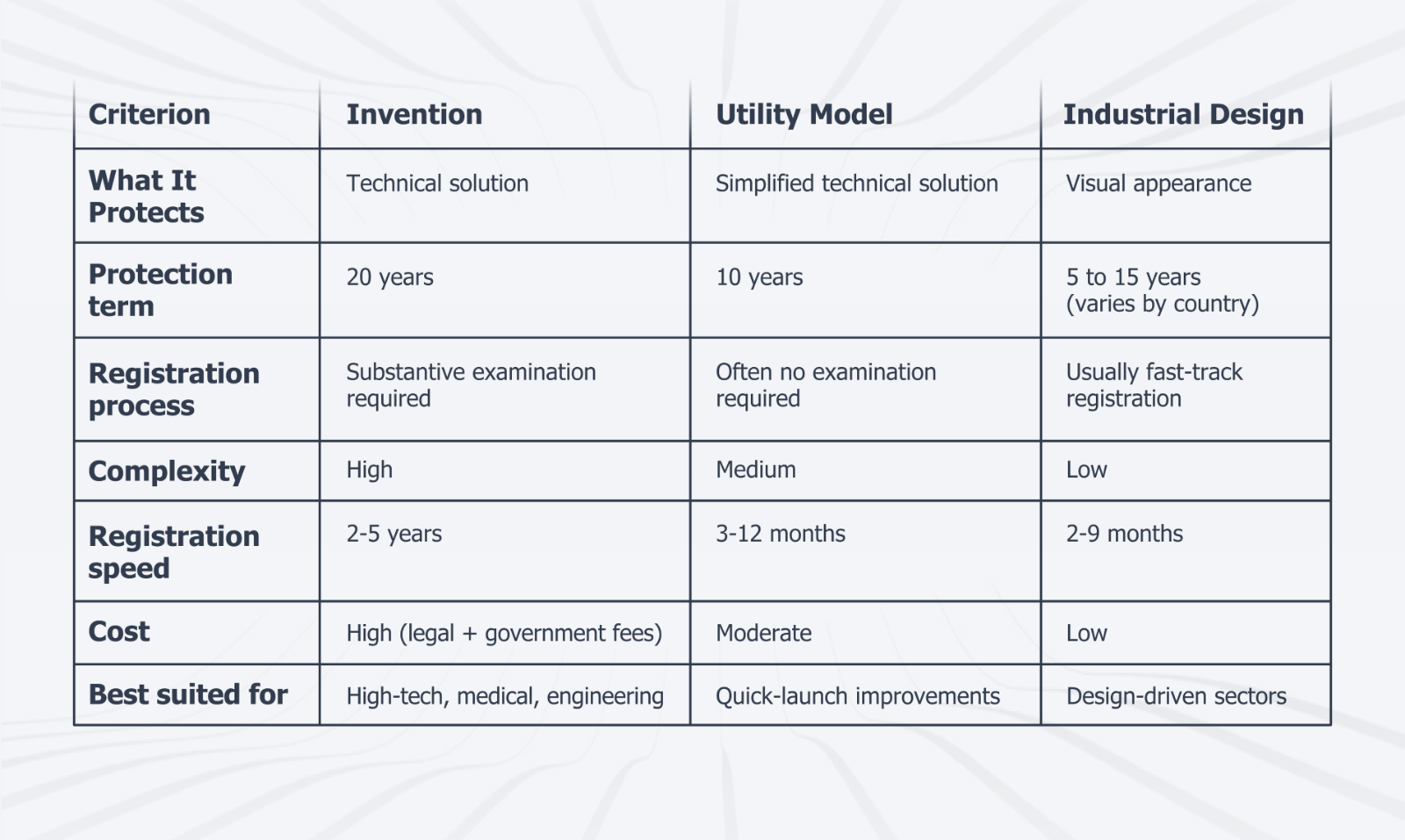
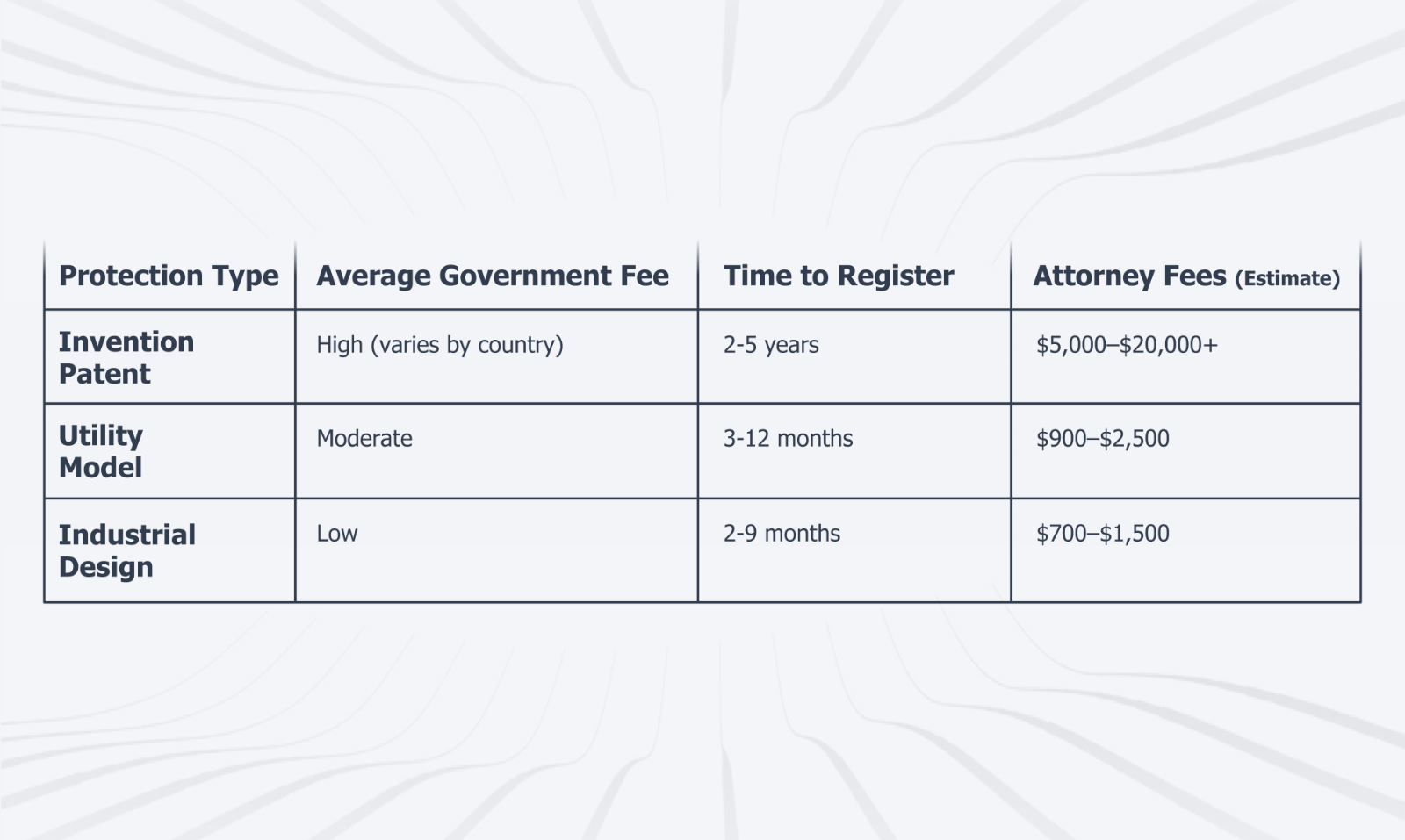
Requirements Across Key Markets
China and Germany stand out as the most popular destinations for utility models, each with its own streamlined path.
In China, the CNIPA conducts only preliminary examination—no substantive review of inventiveness. Filing fees start at just 500 CNY (about $70), with grants typically arriving in 6–12 months and often sooner. The protection lasts 10 years from filing.
In Germany, the DPMA registers Gebrauchsmuster rights even faster. Electronic filings cost 30–40 EUR, and registration frequently lands within 2–3 months—sometimes as little as 6–8 weeks—provided documents meet formal standards. Like China, the term runs 10 years, with maintenance fees kicking in after year three.
Both systems accept filings in the local language or with timely translations, making accurate translation the single most critical step for foreign applicants.
Utility Model Patent Translation Cost China vs Germany
Language accuracy directly affects legal strength. A single mistranslated claim or ambiguous technical term can weaken enforceability or invite invalidation challenges later. That’s why professional patent translation isn’t optional—it’s the foundation of reliable protection.
Here’s a clear side-by-side breakdown for a typical 5,000-word technical specification (common for utility models):
| Aspect | China (to Chinese) | Germany (to German) |
|---|---|---|
| Official Filing Fee | 500 CNY (~$70) | 30–40 EUR (~$33–44) |
| Professional Translation Cost (certified technical) | $1,000–$1,500 | $600–$900 |
| Attorney/Agent Fees (basic) | $800–$1,500 | $500–$1,000 |
| Timeline to Grant | 6–12 months | 2–3 months |
| Total First-Year Cost (approx.) | $2,000–$4,000 | $1,200–$2,500 |
These figures reflect 2025–2026 market rates for certified technical translations. German tends to run lower because English-to-German pairs are more common in Europe, while Chinese demands specialized expertise in engineering terminology. Either way, investing in precision upfront avoids far costlier problems down the road—re-filings, weakened claims, or lost infringement cases.
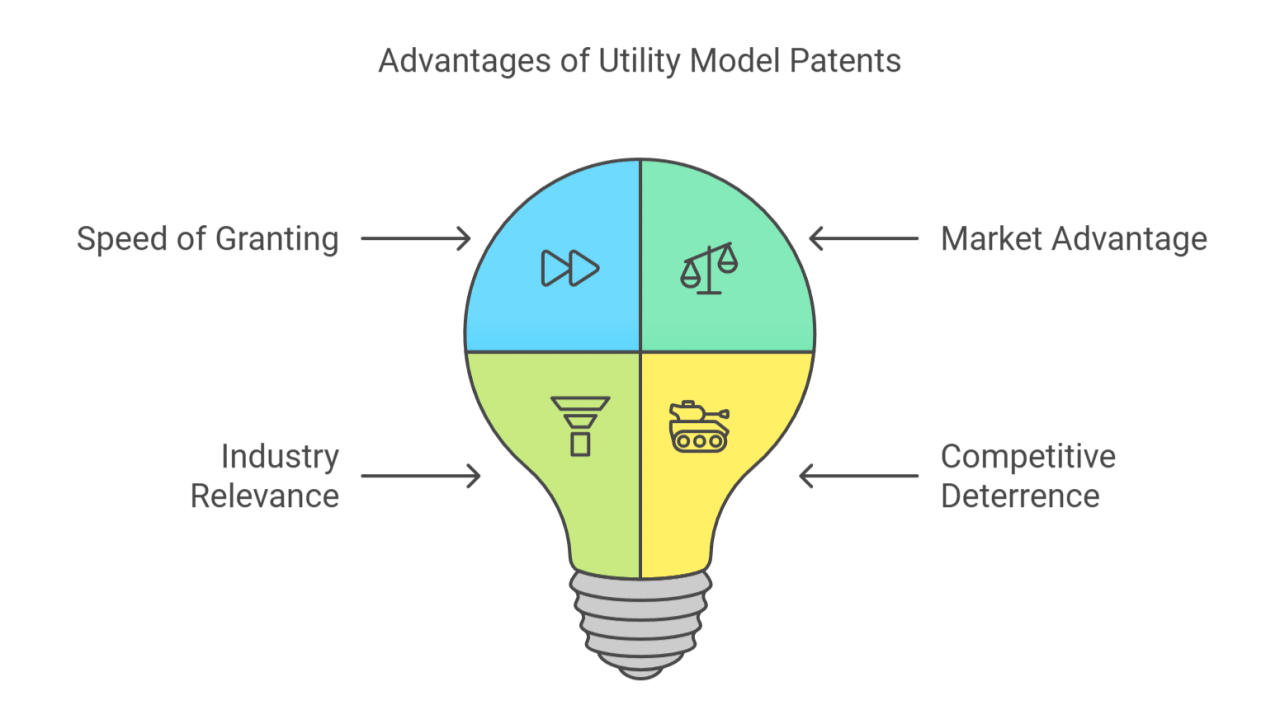
The Real Risk: Language Errors That Undermine Protection
Slow protection is one headache. Higher rejection rates in fast-moving industries are another. But the silent killer is poor translation. Vague descriptions or inconsistent terminology can render a utility model unenforceable, even after quick registration. Courts and competitors will exploit any ambiguity, turning what should be ironclad rights into expensive litigation fodder.
Experienced applicants know this and build translation into the earliest stage—before filing. They lock in precise, jurisdiction-specific wording that survives both formal review and future enforcement.
Step-by-Step Checklist for Utility Model Filings
Getting it right doesn’t have to be complicated. Follow this practical sequence:
Confirm suitability — Verify the innovation qualifies as a practical improvement (product shape, structure, or configuration—not methods or software in most cases).
Draft the core specification — Prepare claims, description, drawings, and abstract in your native language with technical precision.
Secure certified translation — Engage a specialist who understands both the technology and target jurisdiction’s legal phrasing. Deadline matters: Germany allows three months for German translation; China requires it on filing or shortly after.
File with local office or agent — Submit electronically for fastest processing and lower fees.
Pay fees and monitor — Track the quick formal review—no lengthy examination responses needed.
Request evaluation report (China only) — Optional but recommended before enforcement to strengthen validity presumption.
Maintain protection — Pay renewal fees on schedule (starting year 3–4 in both markets) to keep rights active for the full 10 years.
Complete this checklist with accurate translation and your practical innovation gains enforceable rights months—or even years—ahead of full patents.
Turning Speed Into Real Competitive Advantage
In a world of rapid iteration, waiting for invention patents means watching knockoffs erode your edge. Utility models close that gap with straightforward, affordable protection that actually arrives when you need it. The difference between success and regret often comes down to one decision: getting the translation right the first time.
For companies serious about protecting innovations across borders without delays or legal vulnerabilities, the right partner makes all the difference. Artlangs Translation has spent years mastering exactly this space—proficient in over 230 languages with deep specialization in translation services, video localization, short drama subtitle localization, game localization, short dramas and audiobooks multilingual dubbing, plus multilingual data annotation and transcription. Their track record includes numerous standout projects that helped inventors secure airtight rights in China, Germany, and beyond, proving that fast, accurate patent translation doesn’t just speed up protection—it strengthens it for the long haul.