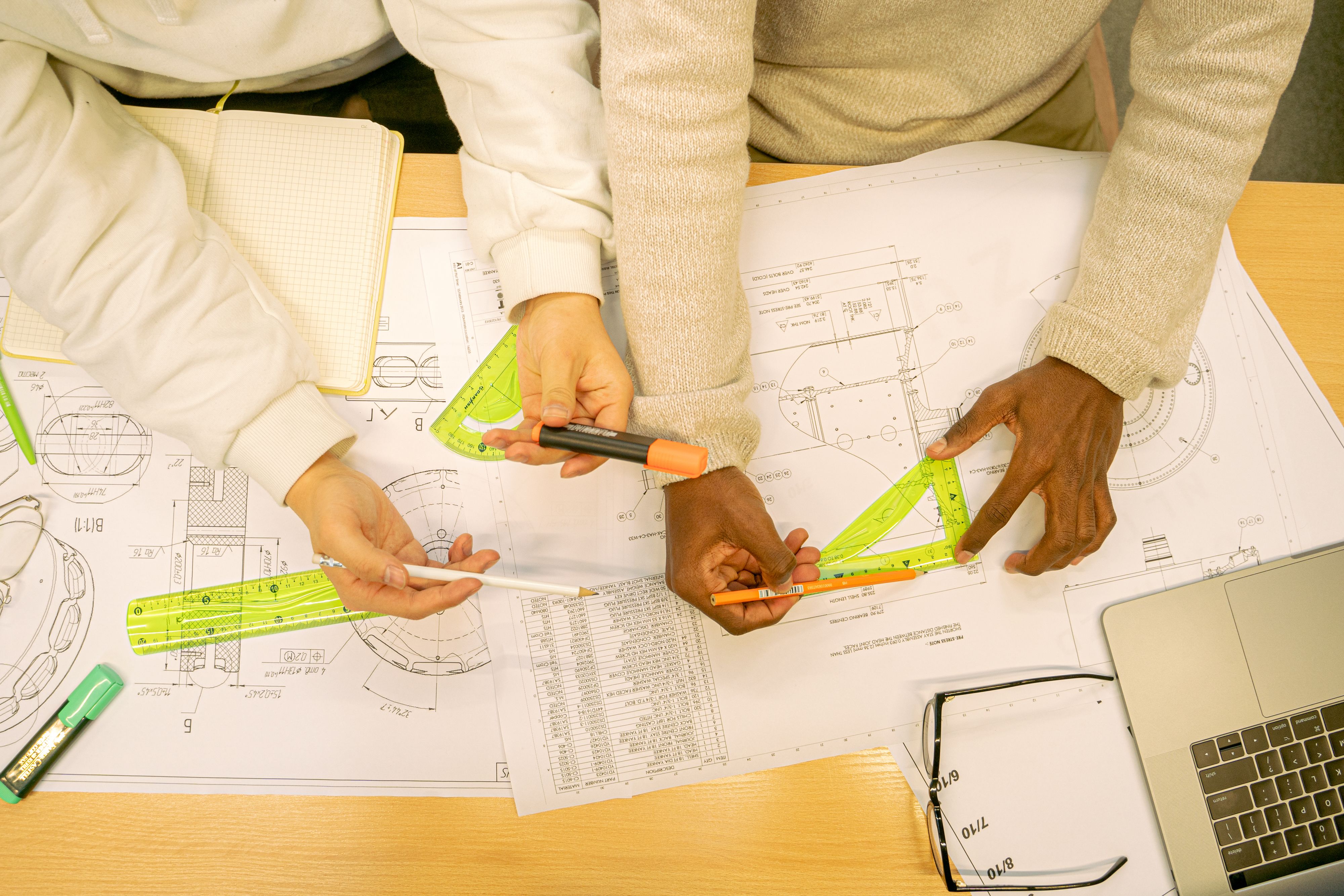
A mechanical assembly drawing lands on a supplier’s desk in another country. The dimensions look familiar. The title block is intact. Then someone tries to open the DWG and the callouts have turned into boxes, the Chinese notes have stretched across dimension lines, and a material code that should have read “45# steel equivalent to ASTM A1045” has become something unrecognizable. Production stops before it begins.
This is the everyday reality of engineering drawing translation. It is not ordinary document work. CAD files—whether DWG, DXF, or native formats from SolidWorks or similar platforms—store text as attributes bound to geometry, layers, blocks, and annotation styles. Change the string and you risk breaking the spatial relationships that make the drawing usable on the shop floor.
The technical barriers that generic tools ignore
Three issues dominate every serious project.
First, layout integrity and desktop publishing. Text expands. English to German or Russian routinely grows 30 percent or more; Chinese to English can stretch even further depending on the density of notes. Fixed-width callouts, title blocks, and leader lines do not expand with the language. Without careful DTP adjustment—repositioning, scaling, or controlled line breaks—the translated text covers geometry or drifts off the intended feature. Native CAD translation that preserves layers and block attributes is essential; converting everything to PDF and translating the image often collapses the structure that later users need.
Second, font compatibility and encoding. AutoCAD’s SHX fonts and many TrueType technical fonts simply lack glyphs for CJK characters, Cyrillic, or Arabic. Missing fonts produce question marks or empty boxes. Different software versions or encoding mismatches (UTF-8 versus older regional code pages) produce the same garbling. A competent workflow embeds or substitutes appropriate fonts while keeping the original style hierarchy so the drawing still looks like an engineering document rather than a patched graphic.
Third, layers and object types. Text lives in single-line entities, multi-line MText with embedded formatting codes, block attributes in title blocks, and external references. Locked layers, model-space versus paper-space distinctions, and repeated block definitions must be respected. Translating only the visible strings while ignoring these relationships produces files that open but cannot be edited or printed correctly downstream.
Why domain knowledge is non-negotiable
Mechanical abbreviations and standards create the highest risk of real-world failure. GD&T feature control frames, material designations (JIS, ASTM, DIN equivalents), surface finish symbols, and tolerance classes are not free text. A mistranslated datum reference or an incorrect material code can send parts into production that will never assemble or that fail inspection. Industry reports and manufacturer case studies repeatedly link documentation errors—especially those involving tolerances and process instructions—to line stoppages, scrap, and delayed shipments. In regulated sectors the same mistakes trigger compliance problems.
The barrier is therefore dual: the translator must read the drawing the way a mechanical engineer does, and the DTP specialist must treat the file as structured engineering data rather than a page layout. Teams that lack both skills routinely deliver files that look translated yet remain unusable or, worse, silently dangerous.
What reliable practice actually looks like
Experienced providers extract text while protecting geometric and attribute relationships, maintain terminology databases calibrated to the client’s standards, run bilingual engineering review on critical callouts, and perform final CAD validation so that layers, fonts, and spatial placement survive. Native-format delivery is preferred whenever the receiving plant will continue to edit or plot the files. When only PDFs are available, high-resolution OCR followed by careful re-insertion still requires the same domain and DTP discipline.
These steps are slower and more expensive than machine translation of extracted text, yet they prevent the far higher costs of production interruptions and non-conforming parts.
Artlangs Translation has spent more than twenty years refining exactly this combination of mechanical literacy and technical DTP. With support across 230-plus languages and a network of more than 20,000 professional linguists, the company has delivered complex CAD and engineering drawing projects for manufacturing, construction, and industrial clients. Its broader capabilities also cover video localization, short-drama subtitle work, game localization, multilingual audiobook dubbing, and large-scale data annotation and transcription—services that share the same insistence on domain accuracy and format fidelity. The result is documentation that travels cleanly across borders and arrives ready for the next stage of design or production.