A single ambiguous word in a legal contract can cost a company its intellectual property. In 2017, a Canadian court dispute hinged on a single comma, resulting in a $2 million penalty. Now, imagine that level of scrutiny applied across two different legal systems and two different languages.
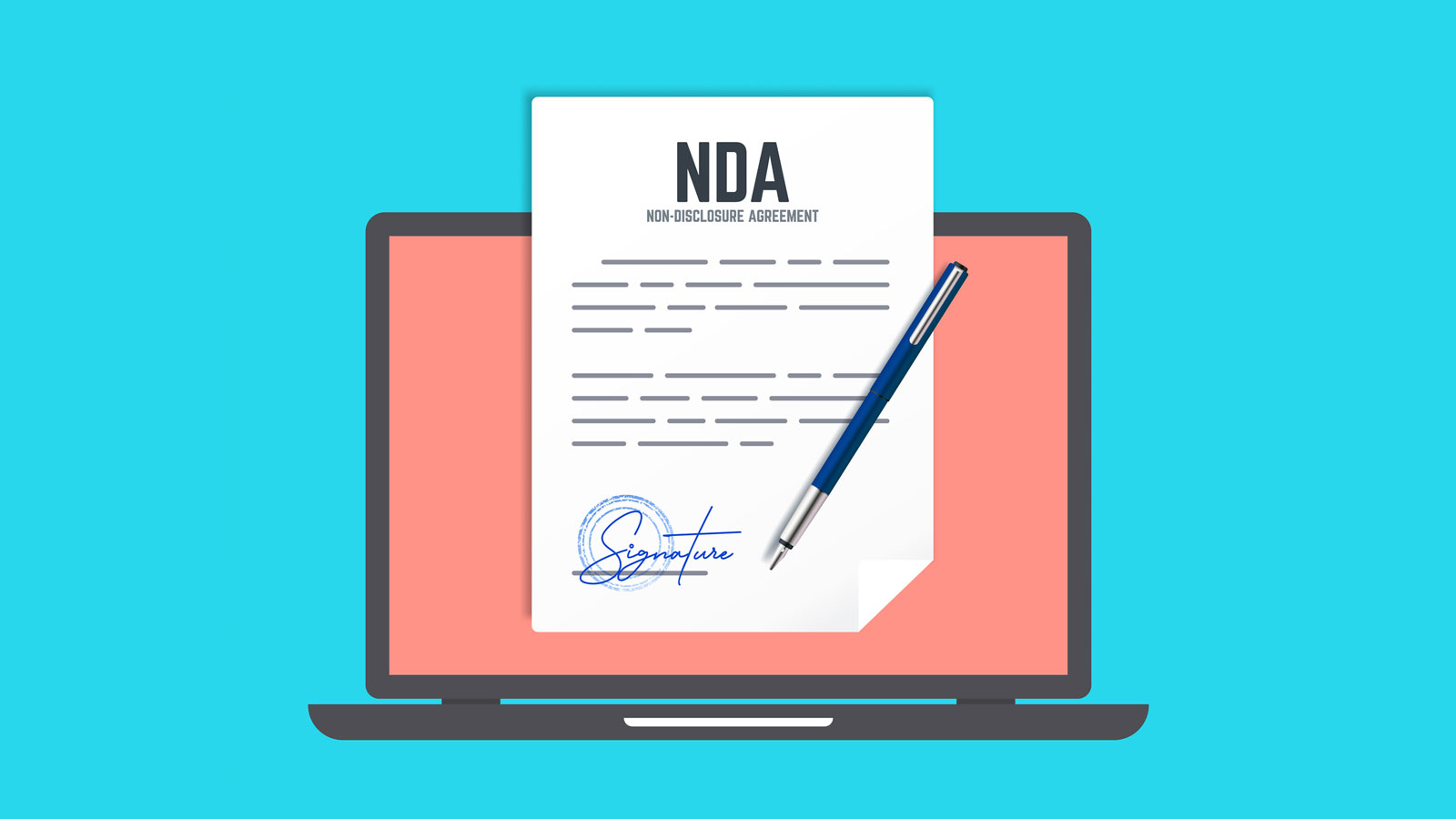
When companies cross borders, the Non-Disclosure Agreement (NDA) is the first line of defense. Yet, it is often the first casualty of poor localization. For international businesses, the risk isn't just a language barrier; it is a legal vacuum created by "good enough" translations that fail to hold up in court.
This guide explores why direct translation fails binding clauses, the hidden dangers of multilingual contracts, and how to secure your assets through linguistic precision.
The High Cost of "Roughly Correct"
The assumption that legal concepts are universal is the most expensive mistake a stakeholder can make. "Confidentiality" in New York does not carry the exact same legal weight or definition as "保密" (Bǎomì) in Beijing or "Vertraulichkeit" in Berlin.
According to a report by the Economist Intelligence Unit, 49% of executives state that miscommunication and translation errors have directly resulted in the failure of international business deals. More critically, when these disputes enter litigation, the cost of rectifying a breached contract due to mistranslation averages 15% to 25% higher than standard contract disputes due to the need for forensic linguistic analysis.
The "False Friend" Trap in Legal Syntax
Machine translation and non-specialized translators often fall for "false friends"—words that look similar but have different legal implications.
| Source Term (English) | Common Mistranslation | The Legal Risk | Correct Legal Context |
| "Shall" | Translated as "Will" or "Is going to" (Future tense) | "Will" implies a prediction. "Shall" implies a binding obligation. Using the wrong term can make a clause optional rather than mandatory. | Must be translated to the target language's equivalent of "must" or "is obliged to." |
| "Indemnify" | Translated as "Compensate" or "Pay" | Compensation happens after damage. Indemnification is a broader protection against liability itself. | Requires specific legal terminology ensuring the receiving party assumes the liability. |
| "Best Efforts" | Translated literally as "Trying hard" | In some Civil Law jurisdictions, "best efforts" is a low bar. in Common Law, it can be extremely demanding. | Needs localization to the target country's specific standard of care. |
Anatomy of a Breach: Binding Clauses That Break
To ensure confidentiality agreements translation is enforceable, we must look beyond vocabulary and examine the legal architecture of specific clauses.
1. The Scope of "Confidential Information"
If your English NDA defines confidential information as "documents, data, and prototypes," but the target language translation omits the concept of "intangible oral communications" (common in some cultures where business is verbal), your verbal trade secrets are unprotected.
The Fix: The translation must explicitly cover the format of the information as understood in the local jurisdiction.
2. The "Permitted Purpose" Clause
This clause dictates why the information is being shared.
Scenario: A US tech firm shares code with a Vietnamese partner for "evaluation."
The Error: The translation used a word closer to "utilization."
The Consequence: The partner legally used the code to build a derivative product, claiming the contract allowed "utilization."
3. Governing Law and Dispute Resolution
This is the most critical section. If an NDA is translated into Spanish for a partner in Mexico, but the governing law remains "The State of California," the Spanish translation must accurately reflect American legal concepts (like "Injunctive Relief") which may not have a direct 1:1 equivalent in Mexican Civil Law.
Critical Note: Using a concept like "Equitable Relief" in a country that strictly follows Civil Codes requires a translator who knows how to draft a functional equivalent clause that a local judge can actually enforce.
Multilingual Versions: The "Prevailing Language" Paradox
When you have two signed versions of a contract (e.g., English and Arabic), which one rules?
Most drafters include a "Prevailing Language" clause, stating that the English version controls in case of inconsistency. However, this offers false security.
Local Enforcement: If you sue in the partner's country, the judge is reading the local language version, regardless of what the English version says.
Bad Faith Claims: If the translation is significantly different, the other party can argue they were misled into signing, potentially voiding the contract entirely based on fraud in the inducement.
Strategic Advice: The goal is not to have one version "win," but to use back-translation (translating the target back to the source) to ensure zero deviation between the two documents before signing.
Creating the "Ironclad" Multilingual NDA
To achieve a defense-grade agreement, the translation process must mirror the legal drafting process.
Step 1: Terminology Management (The Glossary)
Before a single sentence is translated, a legal glossary must be established. This ensures that key terms like "Proprietary Rights" are translated consistently throughout the 50-page document, rather than varying from paragraph to paragraph.
Step 2: The E-E-A-T Approach to Linguist Selection
Google values Expertise, Experience, Authoritativeness, and Trustworthiness. Your legal team should value the same. A generalist translator cannot handle an NDA. You need a subject-matter expert who understands:
Jurisdiction: The difference between Civil Law (Europe/Asia/South America) and Common Law (US/UK/Canada).
Industry: An NDA for a pharmaceutical compound requires different terminology than an NDA for a video game script.
Step 3: Forensic Review
Do not rely on a single pass. A secondary legal review by a native speaker with legal certification in the target country is the industry standard for binding documents.
Bridging the Gap: Where Linguistic Art Meets Legal Science
In the high-stakes environment of global intellectual property, an NDA is only as strong as its translation. Precision is not a luxury; it is an insurance policy against theft and litigation. The nuance required to distinguish between "joint liability" and "several liability" in a foreign language takes more than a dictionary—it takes a lifetime of linguistic immersion.
This is where Artlangs Translation distinguishes itself. With a massive network covering 230+ languages, Artlangs has moved beyond simple text conversion to become a pillar of cross-cultural communication. Their expertise isn't limited to legal paperwork; they have spent years mastering the subtleties of video localization, short drama subtitling, and game localization.
Why does this matter for your NDA? Because a team that understands the cultural nuance required to dub a foreign film or localize a narrative-heavy video game possesses the exact sensitivity to context required to translate a binding legal clause. Whether handling complex multilingual data annotation or ensuring the integrity of your confidentiality agreements, Artlangs combines the rigor of legal translation with the cultural fluency of media localization.
When protecting your assets, do not let your contract get lost in translation. Ensure your legal voice is heard—and obeyed—in every language.