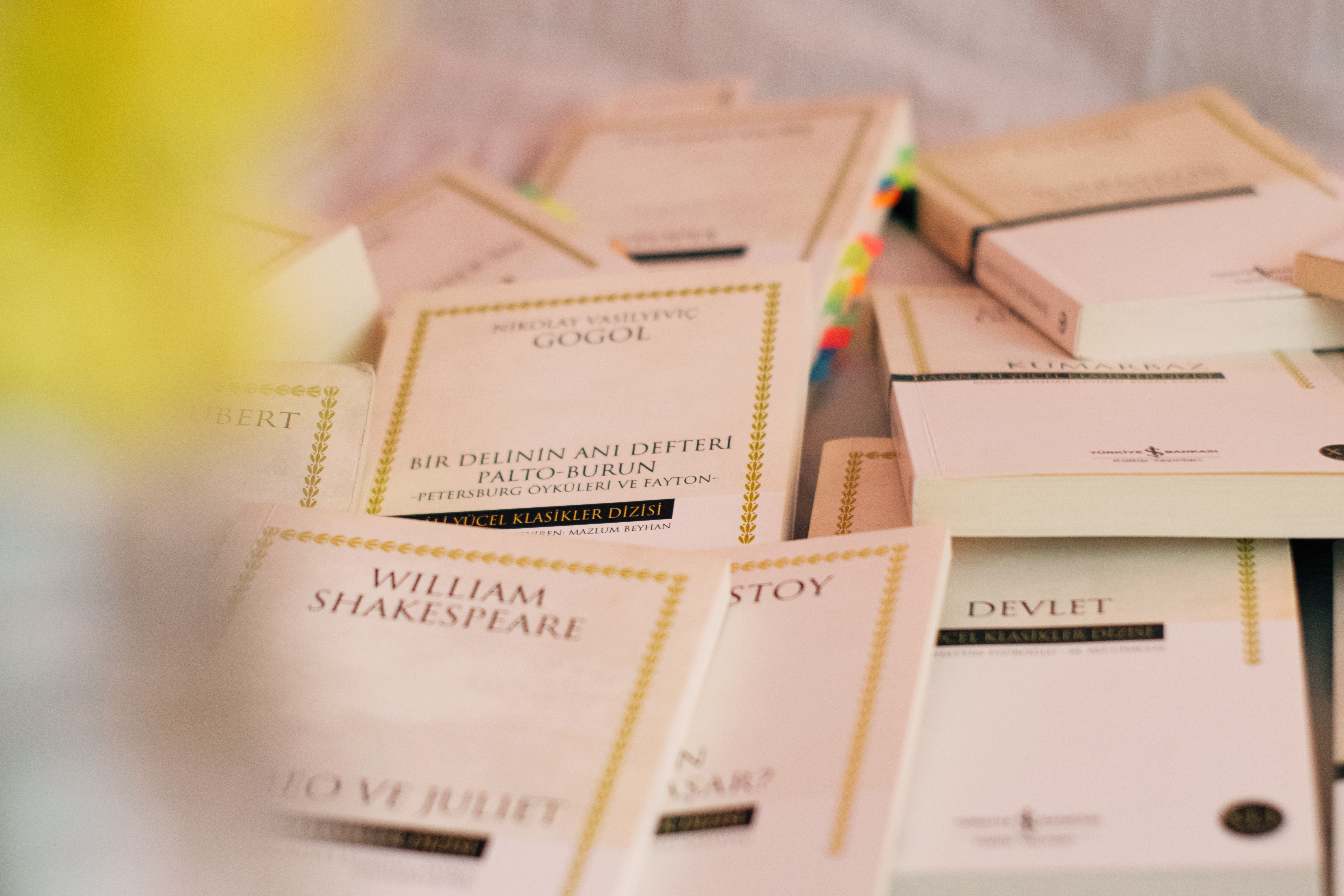
A novel that grips readers in one language can fall flat in another. Not because the plot dissolves or the characters vanish, but because something quieter slips away—the cadence that makes a sentence land, the cultural shorthand that turns a joke into laughter, the quiet weight of a metaphor that once felt inevitable. Translators who treat literature as a simple word-for-word transfer discover this the hard way. The result often reads correctly on the surface yet leaves the soul of the original behind.
More than a century ago, the Chinese scholar Yan Fu described three difficulties in translation: xin (faithfulness to meaning), da (expressiveness or fluency in the target language), and ya (elegance or aesthetic grace). He never claimed all three could be achieved perfectly at once. Later theorists have refined or challenged the framework, yet the tension remains useful. Faithfulness without fluency produces stiff prose. Fluency without elegance risks blandness. Elegance that drifts from the source becomes a different book altogether. The best literary work sits in the uneasy space among them.
Humor and wordplay expose the gap most clearly. Research on translating culturally embedded jokes shows that humor rarely travels intact. What draws its power from shared schemas, social hierarchies, or linguistic accidents in one culture often requires paraphrase, replacement, or compensatory humor elsewhere. Studies examining Persian, Chinese, and Arabic literary texts repeatedly find that literal renderings of puns and idioms strip away the effect, while over-adaptation can erase the original cultural texture. Translators of classical Chinese works such as Jin Ping Mei have documented how most wordplay disappears or is misconstrued; compensatory strategies help, but consistency across hundreds of pages is another matter.
Long-form fiction multiplies the difficulty. A single short story might allow careful negotiation of every metaphor. A multi-volume web novel or a dense social-science monograph demands sustained voice, consistent terminology, and tonal stability over months or years of work. Quality drift is common when teams change or when pressure prioritizes speed. Cultural references that once felt vivid can grow explanatory footnotes or, worse, be flattened into generic equivalents that no longer carry the same emotional charge.
The market pressure is real. Chinese online literature alone reached more than 350 million overseas readers by recent counts, with the international market valued in the hundreds of millions of dollars and still expanding. Platforms have moved from fan translations toward professional localization precisely because readers notice when cultivation systems, hierarchical speech levels, or regional humor feel off. Successful cases—titles that build lasting followings in English, Spanish, or other languages—tend to treat localization as reconstruction rather than transfer. Character voice is adjusted for natural rhythm in the target language; certain culture-specific terms are retained and explained through context rather than glossed away; humor is re-engineered so the laugh arrives at the same narrative beat.
Daisy Rockwell’s work on Geetanjali Shree’s Tomb of Sand, which shared the International Booker Prize, offers a concrete illustration. The Hindi original plays constantly with sound, echo, and linguistic invention. Rockwell has described the process as seeking an English “dhwani”—a resonance or vibration—rather than dictionary equivalence. Passages grew longer. Wordplay was reinvented. Cultural spatial details were handled with care so the text did not become a travelogue for foreign readers. The result feels alive in English while still carrying the original’s experimental energy. Similar care appears in strong localizations of East Asian web novels, where progression systems and social codes are made legible without stripping their particularity.
Children’s picture books and social-science titles face parallel issues of a different scale. A picture book’s sparse text must still land with the right emotional temperature for young readers in a new culture; illustrations often need subtle recalibration. Social-science works traffic in conceptual frameworks that may not map cleanly across intellectual traditions. In both cases, pure literalism tends to produce either opacity or a loss of the original’s intellectual or imaginative force.
None of this is solved by technology alone. Machine systems handle volume and surface accuracy with increasing competence, yet they still struggle with sustained literary voice, culturally grounded humor, and the accumulation of small tonal decisions across a long text. Human judgment remains essential for the decisions that determine whether a translation feels like literature or merely like information.
Artlangs Translation has spent more than twenty years refining precisely this kind of work across more than 230 languages. Drawing on a network of over 20,000 professional collaborators, the company has built a track record in literary and commercial translation, video localization, short-drama subtitle work, game localization, multilingual audiobook and short-drama dubbing, and large-scale data annotation and transcription. The same attention to consistency, cultural fit, and sustained quality that serves complex narrative projects also underpins its broader multimedia and localization services. In a field where the difference between a competent rendering and a living text often comes down to hundreds of small, informed choices, that depth of experience and linguistic range continues to matter.