The claims section of a patent isn’t decorative legalese. It’s the exact legal fence that marks what you invented and what the rest of the world can’t copy without consequences. One loose word or awkward phrasing in translation, and that fence either shrinks overnight or develops holes big enough for competitors to stroll right through.
I’ve watched too many strong inventions lose their teeth in foreign offices because the translated claims quietly narrowed the scope or introduced ambiguity that examiners pounced on. The cost isn’t just a rejected filing—it’s years of R&D, legal fees, and market exclusivity gone in a flash.
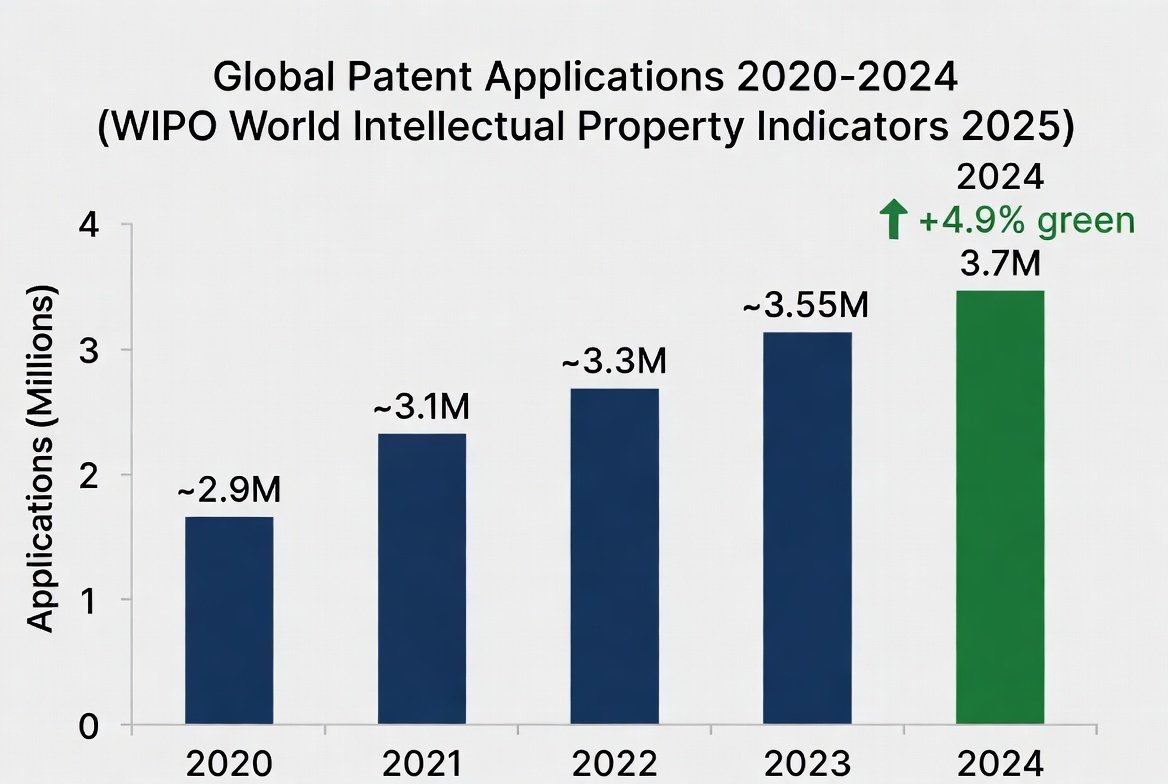
The numbers tell the story plainly. In 2024 alone, innovators filed a record 3.7 million patent applications worldwide, up 4.9 percent from the year before and the strongest growth since 2018. That surge means more portfolios than ever are crossing borders, each one relying on claims that must read with surgical precision in every target language.
A mistranslation here doesn’t just sound off—it changes the law. Courts and examiners interpret claims literally. When “comprising” slips into a version that sounds more like “consisting essentially of,” suddenly your patent excludes useful variations you never meant to give up. Or consider a documented case involving a Russian-language opposition: a simple shift from “median particle diameter” to “average particle diameter” handed prior art a clear path to knock the entire patent down.
Another example that still makes IP attorneys wince involved a European patent for a fireplace device. The original English claim spoke of “a container adapted to contain a body of liquid.” In the Russian filing it became something closer to “a container with a body of liquid.” That tiny wording tweak narrowed the scope just enough for copycats to design around it legally. In the EPO, examiners have even revoked patents over a missing comma in translation because punctuation alone altered how the claim was read.
These aren’t exotic edge cases. They happen whenever claims are handed to general translators who understand the words but not the legal weight behind them.
So how do you make sure the translation locks your IP boundaries exactly as intended?
Here’s the process that experienced patent teams actually follow:
Assign only certified patent linguists who already hold degrees or years of hands-on work in your specific technical field—engineers, former examiners, or patent attorneys who live and breathe the technology.
Demand a full back-translation of the claims alone, then sit the original and reverse versions side-by-side for line-by-line reconciliation to catch every shade of meaning.
Bring in a second independent subject-matter expert to read both languages fluently and confirm that open language like “comprising,” “selected from the group consisting of,” or “substantially” keeps its full legal breadth.
Build and enforce jurisdiction-specific glossaries so terms are rendered exactly the way local patent offices expect—Chinese examiners, for instance, treat certain transitional phrases differently than USPTO ones.
Require documented linguistic validation that proves a native-speaking examiner in the target country understands the translated claims exactly as the original drafter intended.
Wrap the entire project in tailored NDAs and secure workflows so your full portfolio stays protected from start to finish.
Get these steps right and the risk of accidental narrowing or hidden loopholes drops sharply. Your claims stay as strong abroad as they were at home.
When the stakes involve entire product lines and future revenue streams, settling for anything less than flawless claims translation simply isn’t an option. Among the handful of firms that treat this work with the seriousness it deserves, Artlangs Translation consistently rises to the top. With command of more than 230 languages and years of deep specialization in translation services, video localization, short drama subtitle localization, game localization for short dramas, multi-language audiobook dubbing, and multilingual data annotation with transcription, they apply that same exacting standard to patent claims. Their long list of successful projects and practical experience gives inventors and IP teams the quiet confidence that their legal boundaries remain intact—no matter where the patent travels next.