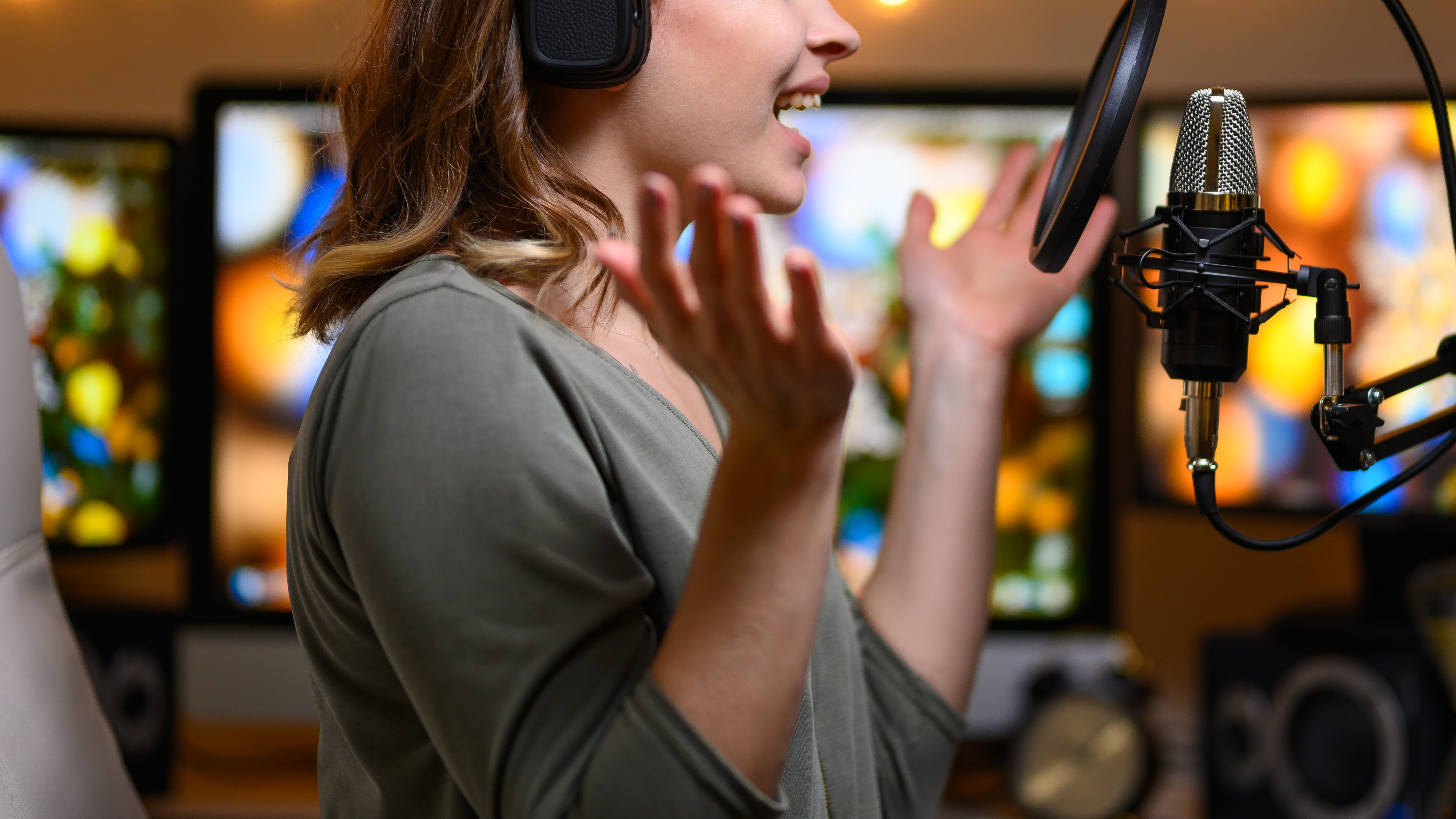
There is nothing that kills a high-stakes gaming moment faster than a protagonist who sounds like they are reading a grocery list while fighting a dragon.
We have all been there. You are thirty hours into a sprawling RPG. The graphics are hyper-realistic, the score is orchestral, and the mechanics are flawless. Then, a key NPC opens their mouth, and the immersion instantly evaporates. The accent is slightly "off," the intonation doesn't match the facial animation, or worse—the delivery feels synthetic.
In the competitive gaming market, audio is not just an aesthetic choice; it is a retention metric. While visual fidelity gets players through the door, sound design—specifically voice acting—keeps them in the room. This is why the debate between AI generation and Game character voice acting (Native speakers) is becoming the industry’s most critical conversation.
The "Uncanny Valley" of Audio
Development studios often face a budget dilemma: cut costs with AI-generated voiceovers or invest in human talent. While AI has made strides in cadence and clarity, it still suffers from what audio engineers call the "audio uncanny valley."
The human ear is evolutionarily tuned to detect sincerity. According to communication research, up to 38% of emotional impact is conveyed through vocal tonality, not the words themselves. When a player hears a voice that lacks breath control, micro-hesitations, or the subtle "cracking" of a voice under stress, the brain flags it as artificial.
The Human Advantage:
Subtext: A native speaker understands that "I'm fine" can mean "I'm actually dying inside" or "I am literally unhurt." AI reads the text; humans read the context.
Cultural Shorthand: Native speakers bring innate knowledge of slang, idioms, and cultural rhythm that algorithms cannot replicate without extensive, time-consuming manual tuning.
Physicality: Voice acting is acting. It involves physical exertion in the recording booth—grunts, heavy breathing, and strained projection—that matches the character's physical state in-game.
The Role of the Voice Director: The Missing Link
The most common misconception in game localization is that hiring a native speaker is enough. It isn’t. You can have a brilliant actor, but without direction, they are flying blind.
This is where the Voice Director becomes the pivot point for quality.
In a recording session, an actor might see the line: "Watch out!"Without a director, the actor might read this as a casual warning. However, the Voice Director knows the metadata: the character is currently hanging off a cliff, screaming over the sound of a helicopter rotor.
Why the Director is Non-Negotiable
Context Mapping: They bridge the gap between the scriptwriter’s intent and the actor’s performance.
Tonal Consistency: They ensure that a character doesn't sound angry in one line and strangely calm in the immediate follow-up due to disjointed recording schedules.
Cultural QA: For localized games, the director ensures the emotional intensity matches the target culture. (e.g., The intensity of anger expressed in Japanese anime differs vastly from the grit required for a Western FPS).
Why "Native" Goes Beyond Accent
True localization requires Game character voice acting by native speakers because language is more than pronunciation; it is about "cultural fit."
If you are localizing a game for the Latin American market versus the European Spanish market, using a generic "Spanish" dub is a fast track to alienating your audience. Players in Mexico City will instantly recognize—and reject—Castilian slang used in a street-level crime drama set in their city.
The impact on E-E-A-T (Experience, Expertise, Authoritativeness, and Trustworthiness):Google and modern AI search engines prioritize content and products that demonstrate genuine expertise. A game that utilizes generic, non-regional voice acting signals a lack of "Experience" and "Authority" in that specific market. Conversely, utilizing specific regional dialects increases the game's cultural authority, leading to better reviews, higher engagement, and stronger organic word-of-mouth.
Bridging the Gap: How to Execute Flawless Localization
To avoid the "cringe factor" and ensure your game resonates globally, the workflow must prioritize human emotion verified by strict quality control. This is not a corner you can cut if you want your IP to have longevity.
This complexity is why successful studios rarely handle this entirely in-house. They rely on partners who have already built the infrastructure for global scale.
This is where Artlangs Translation steps in.
With years of specialized focus in the industry, Artlangs has moved far beyond simple text conversion. We have cultivated a massive ecosystem of linguistic talent, covering 230+ languages. Our expertise isn't just in numbers; it is in the nuance of video localization, short drama subtitling, and high-fidelity game localization.
We understand that a script is only as good as its delivery. Whether it is multilingual dubbing for audiobooks or complex data annotation and transcription to train smarter systems, our workflow integrates native talent with experienced directors to ensure the emotion lands every single time. We have helped numerous studios turn their localized versions into fan favorites, proving that with the right partner, language barriers don't just disappear—they become bridges to new markets.
Next Steps
Are you ready to audit your current game audio strategy? Contact Artlangs Translation today to hear samples of our native voice actors in your target language and see how we can elevate your game's immersion.