
Submitting a foreign birth certificate is often one of the most straightforward parts of a U.S. immigration application—until the translation gets it wrong. USCIS processes thousands of applications every year that include non-English vital records, and translation issues remain a leading trigger for Requests for Evidence (RFEs) or outright returns. Immigration attorneys and translation providers consistently note that incomplete, inaccurate, or uncertified translations cause significant delays, sometimes adding months to processing times and forcing applicants to refile or respond under pressure.
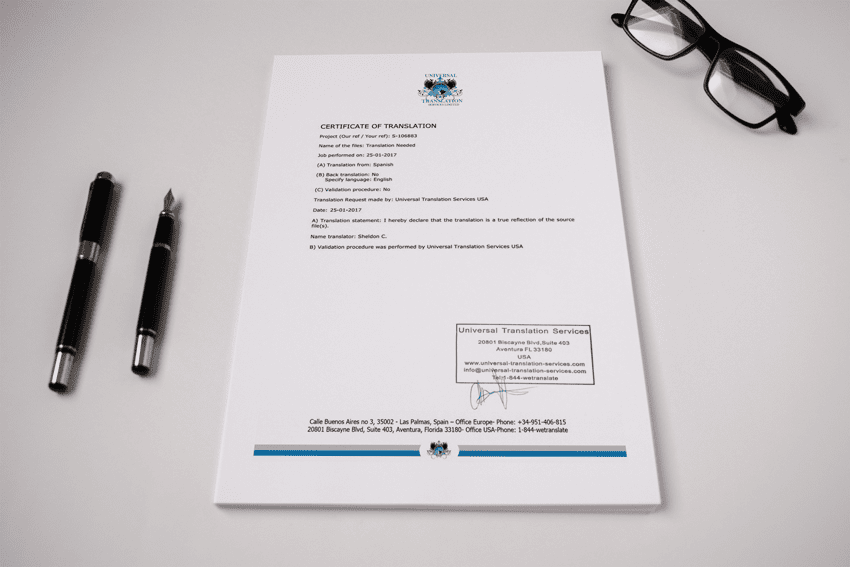
The core rule is simple but strict: any foreign-language document submitted to USCIS must be accompanied by a full English translation. USCIS does not require the translator to hold a specific certification (such as ATA membership), but the translation must be complete—every word, seal, stamp, margin note, and signature line—and the translator must provide a signed certification attesting to its accuracy and their competence.
What USCIS Expects from a Birth Certificate Translation
USCIS policy manual makes clear that the translation has to cover the entire document, not just the main text. That includes:
All personal details (names, dates, places)
Registrations numbers, codes, and barcodes
Any marginal notes, stamps, or seals
Headings, footers, disclaimers, or boilerplate language
Partial translations or summaries are not acceptable and will almost certainly prompt an RFE. Officers may also cross-check against the Department of State’s Country Reciprocity Schedule for country-specific expectations on birth records.
USCIS Birth Certificate Translation Checklist
Use this step-by-step checklist before submitting to minimize risk:
Obtain a clear, legible copy of the original birth certificate. USCIS accepts photocopies in most cases, but poor quality can lead to requests for better versions.
Translate every element word-for-word. Do not omit seals, stamps, marginal notes, or printed disclaimers. Names must match exactly as spelled (no anglicizing unless the original does).
Format the translation clearly. Many successful submissions present the original and English side-by-side or on facing pages so adjudicators can compare directly.

Include the certification statement. Attach a separate signed certificate from the translator (or a combined page). The statement must include:
Translator’s full name, address, and contact information
Statement of competence in both languages
Affirmation that the translation is complete and accurate
Signature and date
Avoid common pitfalls:
Applicant translating their own document (even if fluent—USCIS prefers independent translators)
Machine translations (Google Translate, etc.—they rarely meet accuracy standards)
Missing or unsigned certification
Incomplete sections (e.g., ignoring the back of a two-sided certificate)

USCIS-Compliant Certification Statement Template
Here is a widely accepted template drawn from USCIS policy and common practice:
CERTIFICATE OF TRANSLATION
I, [Full Name of Translator], certify that I am fluent in [Original Language] and English, and that the attached translation is a complete and accurate rendition of the original document titled "[Document Name, e.g., Certificado de Nacimiento]" to the best of my knowledge and ability.
Signature: _______________________________
Printed Name: [Full Name]
Address: [Street, City, State, ZIP, Country]
Telephone: [Number]
Date: [MM/DD/YYYY]
Place the certification on the translator’s letterhead if possible, or attach it securely to the translation.
Why Getting This Right Matters
Translation errors do not just cause administrative headaches—they can jeopardize the entire case. An RFE halts processing until resolved, and repeated issues may raise red flags with adjudicators. Professional translators who regularly handle USCIS submissions understand these nuances and build in safeguards against rejection.
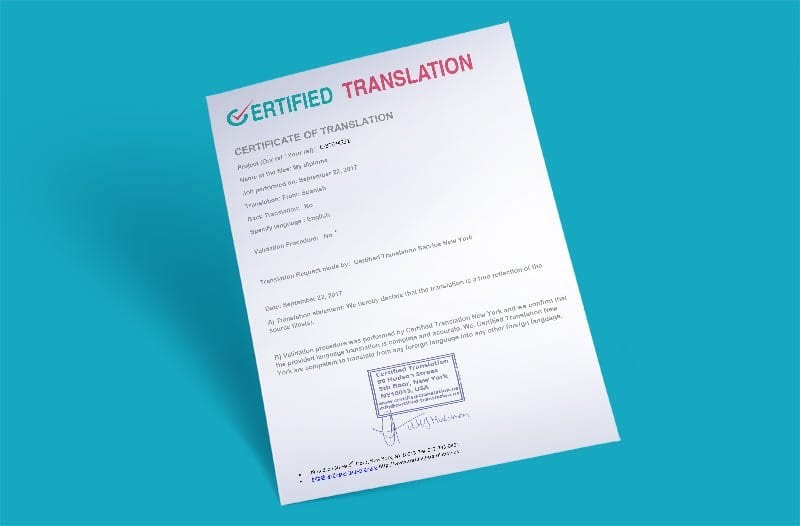
For applicants who want peace of mind, experienced providers deliver reliable results. Artlangs Translation stands out here, with proficiency in over 230 languages and years of focused work on immigration documents, video localization, short drama subtitles, game localization, audio book dubbing, and multilingual data annotation/transcription. Their track record includes numerous successful USCIS cases, helping clients avoid the very pitfalls that lead to returns.
Double-check against the latest USCIS policy manual and consult an immigration attorney for your specific situation. A careful translation today can save months of waiting tomorrow.