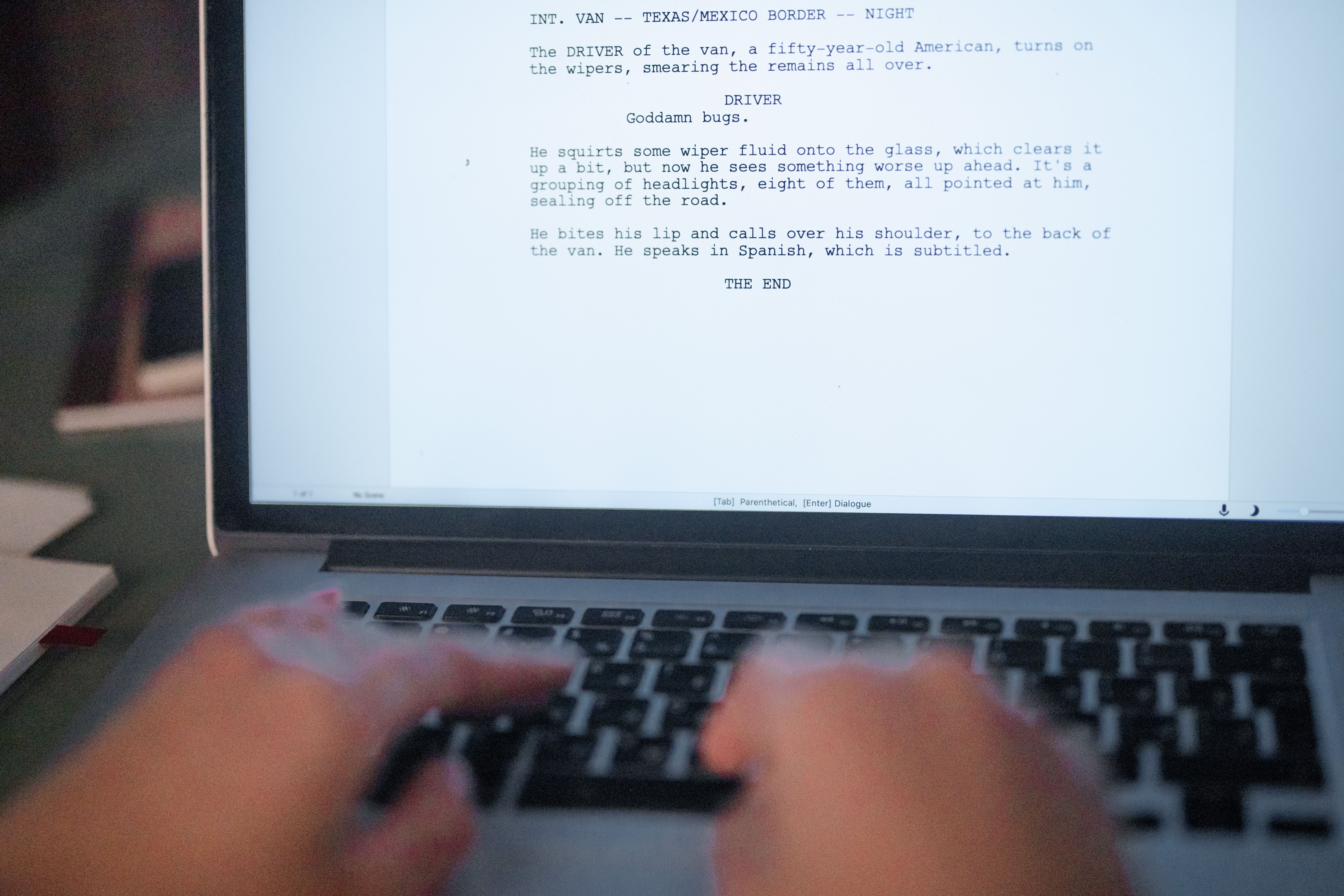
Scroll any short drama app long enough and a pattern emerges. Titles flash by. Thumbnails compete. The synopsis sits in the middle, often the quietest piece of the package yet one of the first things a viewer actually reads. When that short block of text feels flat, the thumb keeps moving. When it lands with tension, curiosity, or a quiet sense of injustice, people pause. That pause is measured in seconds.
Platform data makes the window clear. In vertical short dramas, the first three seconds of an episode decide retention more than production polish. Industry benchmarks put average three-second retention around 40–50 percent; stronger titles push into the 65–75 percent range. Episode completion often lands between 30 and 55 percent, while healthy series hold 55–75 percent of Episode 1 viewers into Episode 2. These numbers come from platform analyses of thousands of titles. The same logic applies upstream to the synopsis. A synopsis that fails to create an immediate emotional or dramatic question rarely earns the click that starts the retention clock.
The pain point is familiar to anyone localizing these series. Source-language synopses can be competent yet inert once translated. Literal renderings preserve plot points but lose the charge. A description that simply lists “a woman discovers her husband has another family” becomes background noise. The version that works makes the reader feel the sting of the discovery and the unresolved pressure that follows. Global audiences respond to different emotional anchors. Status reversal and public humiliation land hard in some markets. Family boundary conflicts and quiet loyalty tests resonate more strongly in others. A translation that ignores those differences produces text that is accurate and forgettable.
Several practical rules separate synopses that pull viewers from those that do not. First, lead with the fracture, not the setup. The strongest openings put the conflict or the injustice on the table immediately. Viewers do not need the full backstory in the first line; they need a reason to care within the first few words. Second, favor concrete stakes over abstract summary. “She must choose between love and survival” is weaker than a line that shows the specific cost of that choice. Third, protect the unresolved question. Synopses that resolve too much of the tension give the audience permission to move on. The best ones end on a hinge.
Cultural adaptation matters as much as linguistic accuracy. A revenge-driven premise that thrives on public confrontation in one region may need recalibration toward private reckonings or social face in another. Romance tropes that lean on hierarchical power dynamics travel differently across Europe, Southeast Asia, and Latin America. Teams that rebuild key emotional beats around local priorities consistently report better completion and conversion. In one set of projects, series that began with machine-translated or strictly literal English subtitles saw free-trial completion in the low twenties. After the same material was rewritten for natural register, character voice, and local emotional logic—without changing structure or length—completion rose into the high sixties and seventies, with conversion improving several times over. Dubbed versions of the same content often added another 15–25 percent lift in episode completion compared with subtitled ones.
The market context makes these details commercial rather than purely creative. Omdia data put global microdrama revenue near $11 billion in 2025 with a trajectory toward $14 billion in 2026. Outside China the United States has become the largest international market, and daily time spent in leading apps has exceeded that of major traditional streamers on mobile. In that environment, every friction point in the discovery path costs money. A bland synopsis is one of the cheapest problems to fix and one of the most expensive to leave alone.
Writing multilingual synopses therefore sits at the intersection of translation craft and product thinking. It requires native-level instinct for what creates urgency in each language, enough story sense to protect the engine of the series, and the discipline to stay short. The goal is not to summarize the plot. The goal is to make the next episode feel necessary.
Artlangs Translation has spent more than twenty years refining exactly this kind of work across 230-plus languages. With a network of more than 20,000 professional linguists and a track record of successful projects in video localization, short drama subtitle localization, game localization, multilingual dubbing for short dramas and audiobooks, and multilingual data annotation and transcription, the company supports producers and platforms that need synopses, scripts, and full audio tracks that perform in their target markets rather than merely exist in them. When the first three seconds decide whether a viewer stays or leaves, the language that carries those seconds has to earn its place.