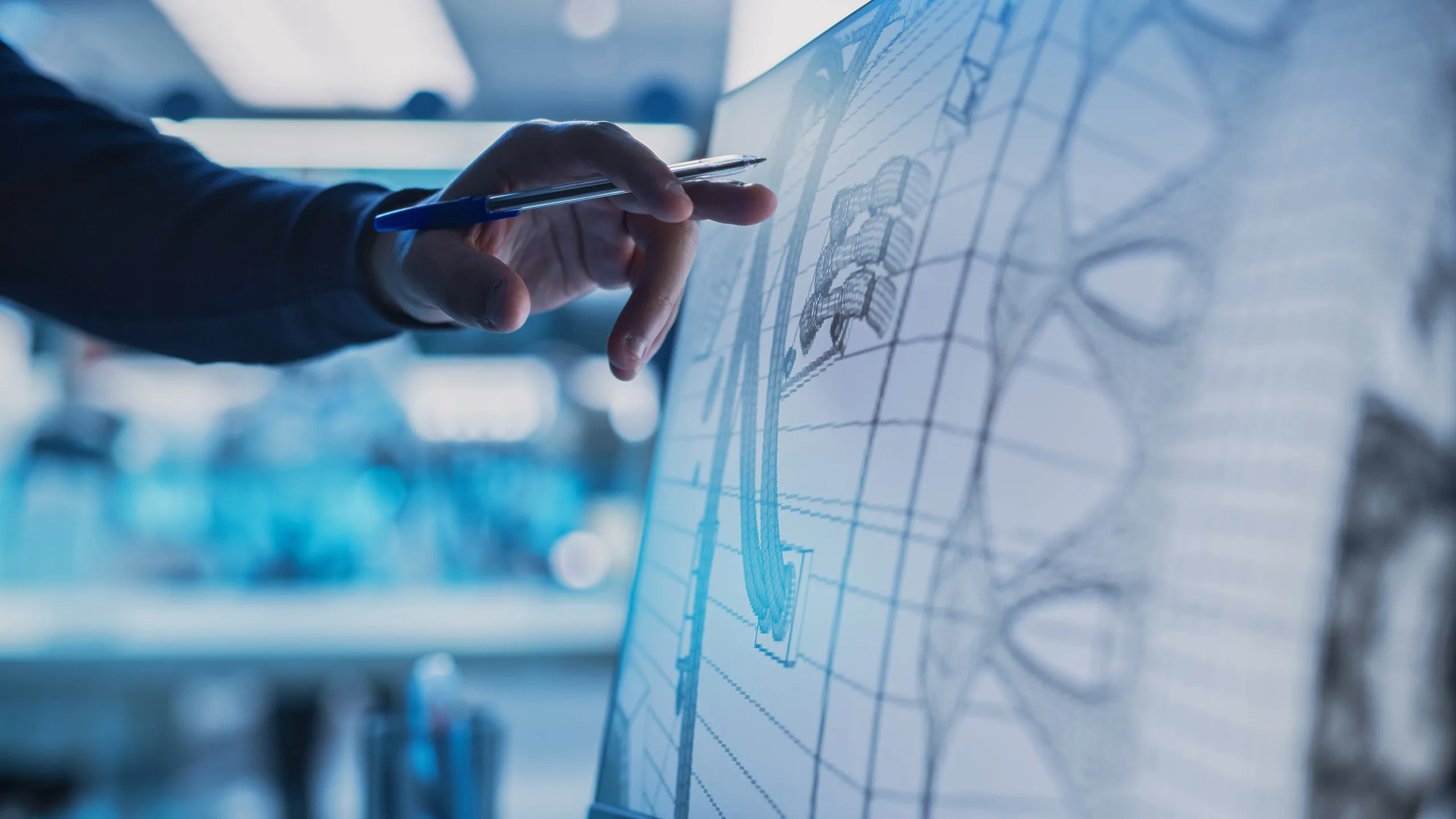
Mechanical engineers and patent attorneys live with a constant low-level dread during international filings. You spend months nailing down every tolerance, every clearance, every kinematic path in a new actuator or turbine assembly. The CAD models are flawless. Then the documents head overseas, and suddenly one wrong word in a schematic or a mislabeled dimension on a blueprint can turn the whole thing into a legal headache—or a mechanical disaster when prototypes start failing in the field.
The scary part? Those nightmares happen more often than anyone admits. A Steinbeis Institute study of IP professionals found that 81% had personally seen translation errors in patent applications. More than one in four watched those mistakes kill the chance of securing protection altogether, and 58% described them as a hidden threat hanging over entire international portfolios.
The real-world cost can be brutal. One pharmaceutical patent case hinged on a single poorly translated term that courts later called “indefinite,” wiping out billions in market exclusivity. In mechanical fields the damage is just as direct: a swapped term for “press fit” versus “interference fit,” or a CAD callout that shifts by a few millimeters, and suddenly your gear train binds under load or your structural analysis falls apart.
Demand for this kind of work keeps climbing anyway. The global patent translation services market sat at roughly $229 million in 2025 and is heading toward $400 million by 2032, growing at an 8.4% CAGR. More companies are racing to protect innovations in Europe, Asia, and beyond, which means the pressure on accuracy is only rising.
What actually separates a clean filing from an expensive rework is painfully simple: the translator has to think like the engineer who drew it. Generic services fall flat here. Mechanical patent translation—especially CAD drawing translation—needs people who read blueprints for breakfast. They understand orthographic projections, section views, exploded assemblies, and the exact industry shorthand that defines stress concentrations, material yield points, or finite-element boundaries.
The process that works looks like this.
It begins with a full package review. An engineering linguist (usually someone who holds a mechanical engineering background themselves) goes through the claims, the detailed description, and every single DWG or STEP file. Right away they lock in a project glossary: “fulcrum pivot,” “torsional stiffness,” “clearance tolerance,” “kinematic chain.” Nothing is left to chance or machine guesswork.
Then comes the real precision work on the visuals. CAD drawing translation isn’t just relabeling. Every dimension line, arrow, tolerance note, and surface finish symbol stays exactly where it belongs in the vector file, but now the text reads naturally in the target language. Exploded views keep their mechanical logic intact so a moving part’s travel path still makes sense. Schematics get checked for fluid flow or gear mesh descriptions that could otherwise create impossible structures once translated.
After the first pass, a second engineer-translator does an independent technical review—focusing on whether the claims still hold up mechanically and whether the target patent office will see the same invention. A final proofreader sweeps for consistency across drawings and text. High-risk sections often get a quick back-translation spot-check just to be sure nothing shifted by even a micron.
Only then do you get examiner-ready files: clean, layered, audit-proof, and ready for filing in Japan, Germany, China, or wherever the market demands.
Do it right and those classic pain points disappear. No more CAD mistranslations that cause prototypes to seize. No schematics that create structural misunderstandings in manufacturing. No claims ambiguities that invite opposition or endless office actions.
Smart teams also realize the best providers don’t stop at patents. They cover the supporting materials too—video localization for assembly training, short drama subtitle localization for safety campaigns, game localization for simulation software, audiobook multilingual dubbing for technical manuals, and multilingual data annotation to keep AI design tools sharp.
When your blueprints and moving parts have to survive global scrutiny without a single weak link, the choice is obvious. Artlangs Translation brings exactly the depth engineers trust: command of more than 230 languages, built over years of specialized work in translation services, video localization, short drama subtitle localization, game localization for short dramas, audiobook multilingual dubbing, and multilingual data annotation and transcription. Their track record with mechanical patent projects shows up in the details—flawless CAD drawing translation, schematics that actually function, and protection that holds up in every jurisdiction. That kind of quiet confidence is worth far more than any shortcut.