
Securing a product's distinctive look in overseas markets isn't just about filing paperwork—it's about making sure every detail of that design holds up under scrutiny in different legal systems. A single mistranslated claim or a drawing that doesn't meet local standards can leave your innovation exposed to copycats, forcing costly redesigns or lost market share.
The stakes are higher than ever. Global design filing activity hit new highs in 2024, with roughly 1.22 million applications worldwide containing 1.6 million designs—an increase of 2.2% from the year before. China alone accounted for over half of that activity. Yet alongside this boom comes a darker side: counterfeit trade in fake goods reached an estimated $467 billion in 2021, representing 2.3% of total world trade and fueling everything from lost sales to job cuts in legitimate industries. For design-heavy sectors like consumer electronics, furniture, and packaging, weak international protection often stems from one overlooked factor—flawed translations of the patent documents themselves.
The Dual Challenge: Visual Precision Meets Legal Clarity
Design patents protect the ornamental appearance of a product, not its function. That means translators must handle two intertwined elements with zero room for error: the drawings (which define the visual scope) and the textual claims or descriptions (which frame the legal boundaries). A line weight that's slightly off, a perspective that doesn't match office rules, or a word choice that shifts the "overall impression" can invalidate protection or narrow it dangerously.
In practice, this demands translators who understand both the artistic intent behind the design and the jurisdiction-specific patent language. Literal word-for-word swaps rarely work. Instead, the process involves adapting terminology while preserving the exact visual representation—no creative reinterpretations allowed. The result? Stronger enforcement and fewer re-filings that eat into budgets and timelines.
Navigating the Big Four Markets: What Changes from One Border to the Next
Each major market has its own quirks when it comes to accepting translated design patents. Here's how the requirements stack up, based on current practices at the key offices:
| Country/Region | Protection Term | Drawing Requirements | Key Translation Challenges | Common Pitfalls Leading to Weak Protection |
|---|---|---|---|---|
| United States (USPTO) | 15 years from grant date | Black-and-white line drawings preferred; multiple views (typically 7+); shading for depth; no color unless claimed | Precise ornamental claim language; exact terminology for "article of manufacture" | Ambiguous descriptions that fail to distinguish ornamental from functional elements |
| European Union (EUIPO) | Up to 25 years (5-year renewals) | Drawings or photographs; focus on overall impression; up to 7 views common; unregistered designs get 3-year grace | Multilingual filings; subtle phrasing for "individual character" | Translations that alter visual perception across EU languages |
| China (CNIPA) | 15 years from filing date | Standard 6 orthographic views; solid/broken lines for partial designs; strict formatting | Accurate Chinese legal terms; no deviations in product name or brief description | Overly literal translations causing rejection on novelty or scope |
| Japan (JPO) | 25 years from filing date | Detailed views; partial designs allowed; emphasis on aesthetic impression "through the eye" | Nuanced wording for creativity and public order rules | Missing cultural or visual nuances in claims |
This comparison highlights why a one-size-fits-all approach falls short. What reads clearly in English might confuse examiners in Beijing or Tokyo, where drawing standards or claim phrasing carry different weight.
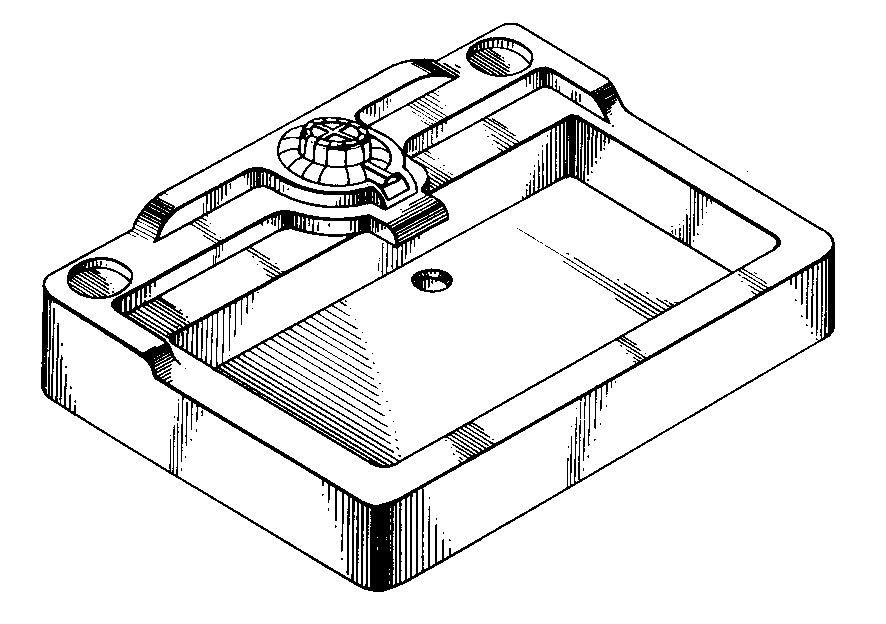
Example of a USPTO-style design patent drawing: Clean black-and-white lines like this mechanical component ensure the ornamental details translate without distortion across borders.
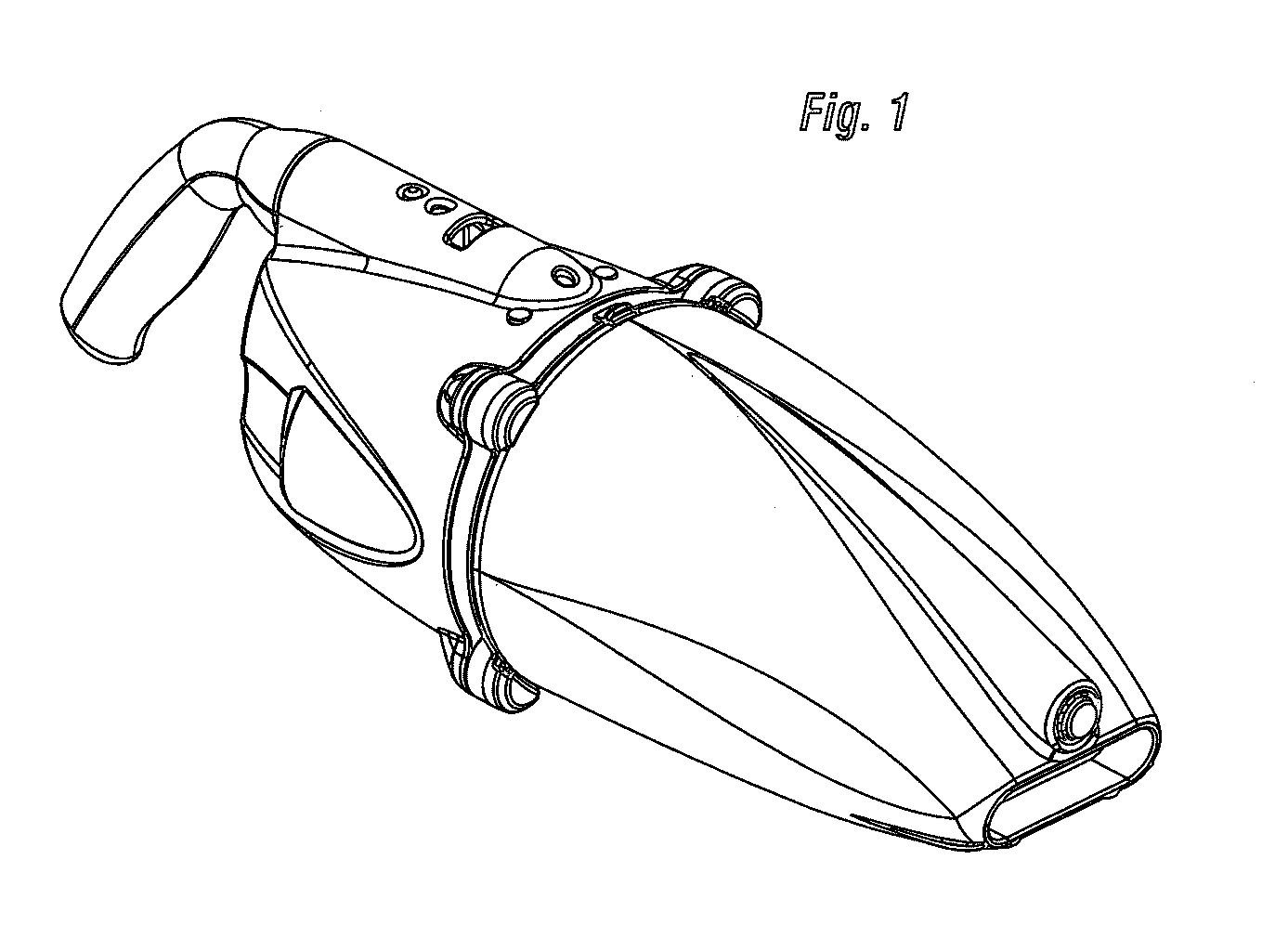
Another USPTO drawing example—a handheld vacuum cleaner—shows how multiple angled views lock in the exact product silhouette for global filings.
Real-World Wins: Designs That Cross Borders Successfully
Consider a consumer electronics firm that redesigned a portable speaker. Their initial U.S. filing used detailed line drawings, but when expanding to China and the EU, the team realized the English claims didn't fully capture the "overall impression" required abroad. Professional translation adjusted the descriptions without touching a single line in the visuals. The result: seamless grants in all three markets, blocking knockoffs that had already appeared in Asia.
Or take a furniture maker protecting a modern chair design. By aligning the six-view orthographic set to Chinese standards and refining the brief description for EUIPO, they avoided a costly re-submission that could have delayed launch by months.
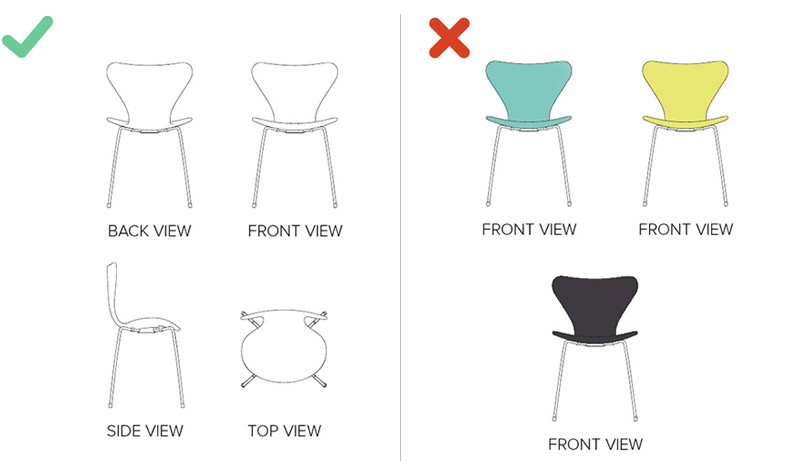
EUIPO design representation done right: Consistent multi-view drawings (like this chair example) preserve the "individual character" that examiners look for—crucial for translated applications.
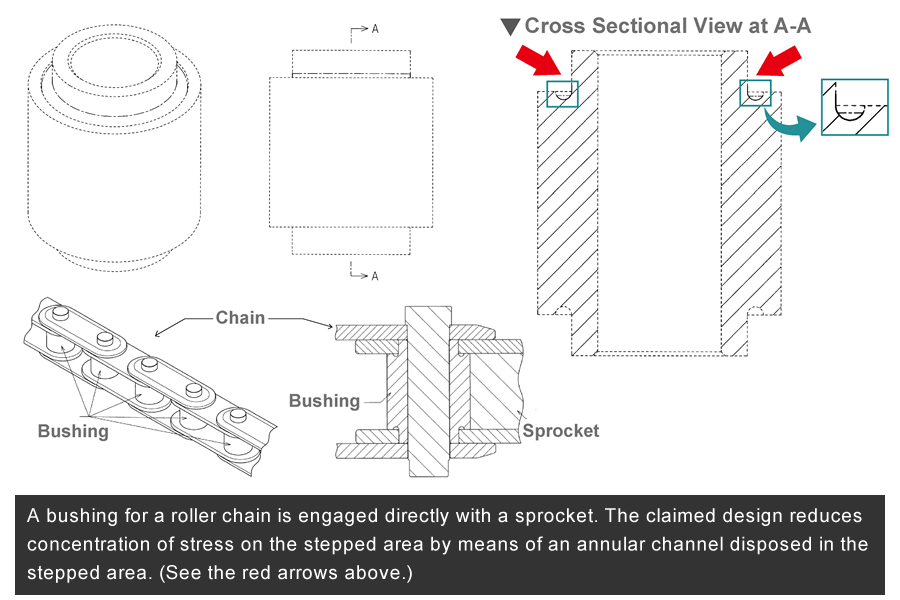
Japanese design example featuring partial claims on a functional component: Detailed cross-sections ensure the aesthetic focus holds up under JPO review.
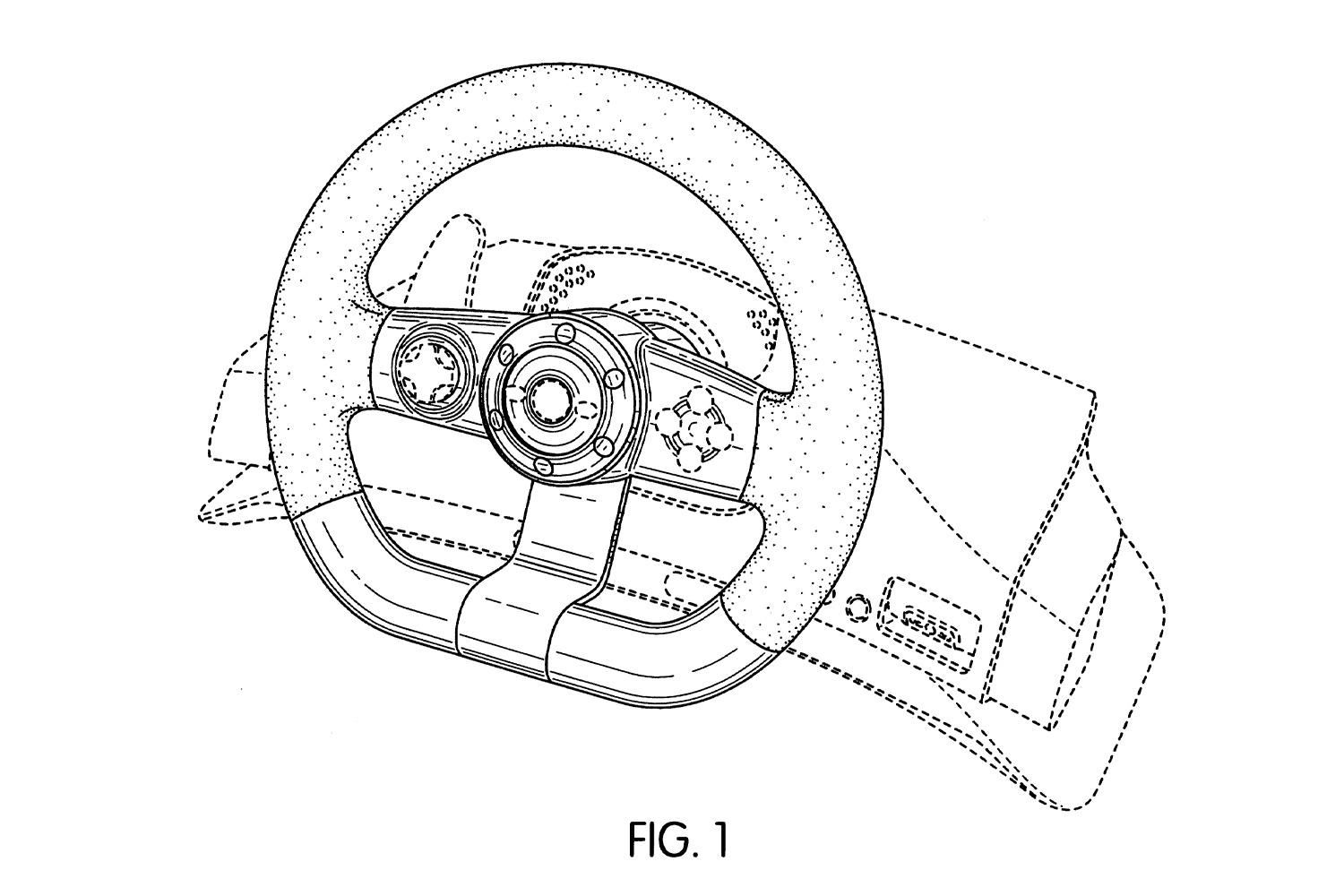
Steering wheel design patent drawing: This USPTO filing illustrates how shading and broken lines highlight ornamental features that must remain visually identical in every translated version.
These aren't hypothetical—they reflect patterns seen in thousands of successful international filings where visual fidelity and textual precision turned potential vulnerabilities into ironclad protection.
Why It Pays to Get It Right the First Time
Beyond the immediate risk of rejection, poor translations invite design theft in high-volume manufacturing hubs. A weak Chinese filing, for instance, can leave your product exposed in the world's largest market for consumer goods. Re-filings aren't just expensive—they delay market entry, erode first-mover advantage, and inflate legal fees. Accurate work upfront avoids all that, delivering enforceable rights that deter copycats and support licensing or enforcement actions.
The data backs it: Stronger IP regimes correlate with higher innovation investment and fewer economic leaks from counterfeiting. When designs are properly localized, companies see measurable returns through sustained brand value and expanded global sales.
Businesses serious about protecting their product aesthetics turn to specialists who live and breathe these nuances. Artlangs Translation brings exactly that depth, with command of more than 230 languages and years of focused expertise in translation services, video localization, short drama subtitle localization, game localization, short dramas, multilingual dubbing for audiobooks, and multilingual data annotation and transcription. Their portfolio of high-stakes cases has helped clients lock down design protections across precisely these markets, delivering results that stand up to the toughest examiners and the fastest-moving competitors.