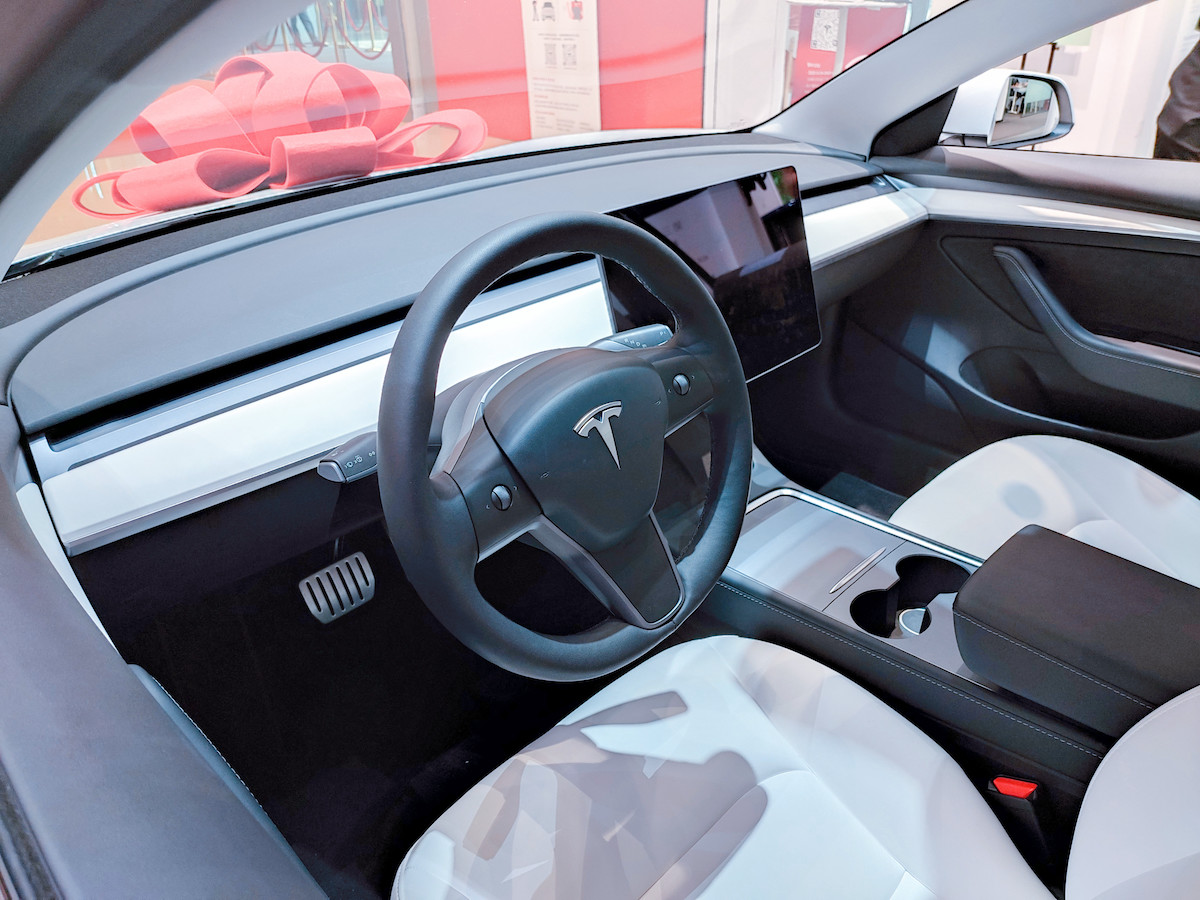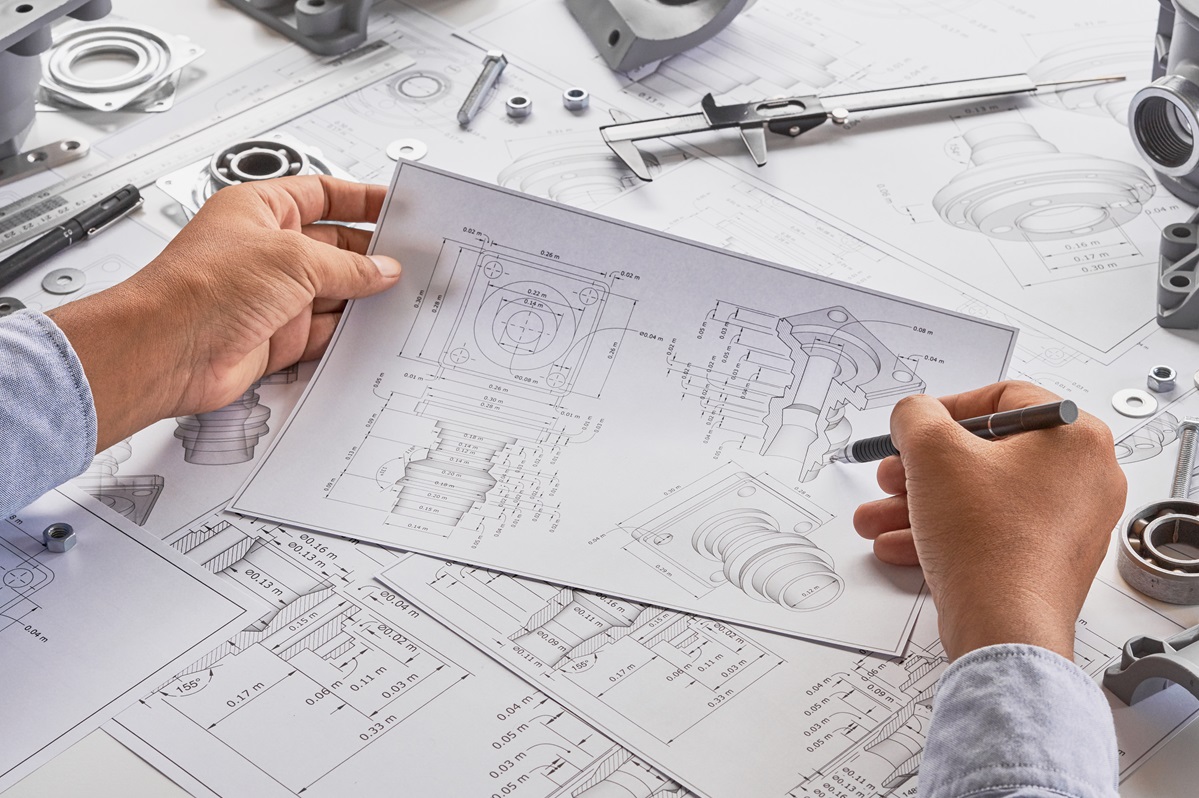
A Chinese EV manufacturer was entering the German market with a mid-range electric SUV. The vehicle had been through the full homologation process, the documentation package had been assembled, and the German distributor was ready to begin pre-sales. Then the German service network started reviewing the maintenance documentation. The workshop manual had been translated from Chinese by a translation provider with general automotive experience. The translation was grammatically correct and the individual terms were accurate. But the German service technicians couldn’t use it.
The specific problem was the diagnostic trouble codes. The workshop manual contained a section listing DTCs and their associated diagnostic procedures. In the Chinese source text, the codes were written as alphanumeric strings that the Chinese technicians had learned to associate with specific failure modes through years of working with Chinese-market documentation. When those codes were transliterated into the translation without accounting for the German ISO 15031 standard for DTC formatting, the codes lost their connection to the procedures. A German technician reading “P0 2F4” in a German-language manual doesn’t have the same contextual knowledge that a Chinese technician has reading the Chinese equivalent, because the diagnostic culture around OBD-II codes is different in different markets. The manual told the technician what the code meant in abstract terms but didn’t connect it to the diagnostic procedure in a way that the German market’s service culture expected.
The deeper problem was terminology. The Chinese automotive industry has developed its own terminology conventions over decades of joint ventures with Western manufacturers and independent domestic development. Some terms are direct calques of the English originals. Others have evolved into Chinese-native terms that don’t map one-to-one to any English term. And some English terms have different accepted translations in different regional Chinese markets — simplified Chinese for the mainland versus traditional Chinese for Taiwan or Hong Kong, with terminology conventions that diverged from each other over time.
When you translate a Chinese automotive manual into German, you’re not just doing Chinese-to-German translation. You’re navigating a chain of terminological evolution: the English term that was the original source, the Chinese term that evolved from it or replaced it, and the German term that corresponds to the English original but may or may not correspond to the Chinese term the source text is actually using. If the translation provider doesn’t understand this chain, they translate the Chinese term literally, and the resulting German text uses a term that is technically incorrect in German automotive usage. The German technician reads it and either doesn’t understand what it means or, worse, understands it to mean something different from what the Chinese text intended.
This is the terminology problem that underlies most automotive translation failures, and it’s particularly acute in the EV segment. The EV powertrain introduces a whole new vocabulary that wasn’t in the traditional automotive lexicon: regenerative braking calibration, battery management system architecture, thermal management loops, charging protocol stacks, inverter modulation, motor torque vectoring. Some of these terms have established German equivalents because they came from German engineering tradition originally — terms like “Drehmoment” for torque, or “Kühlkreislauf” for cooling circuit. But others are genuinely new concepts that have emerged in the last ten years, and the translation conventions for them are still being established. When a Chinese EV manufacturer uses a term for “torque vectoring” that has no established German equivalent, the translation provider has to make a judgment call, and if they don’t have automotive engineering expertise, they usually get it wrong.
The Stuttgart automotive cluster is one of the most technically sophisticated manufacturing regions in the world. The large German OEMs — the BMWs, Mercedes, Audis — have extensive in-house technical writing and translation teams that have spent decades developing the terminology standards that the German automotive industry uses. These standards aren’t published as a single document. They’re distributed across industry association guidelines, OEM-specific style guides, DIN standards for technical documentation, and accumulated practice in workshop manuals and service information systems. A Chinese EV manufacturer trying to enter the German market needs their documentation to meet these standards, not because of any regulatory requirement, but because German service technicians will not trust documentation that doesn’t read like it was written by someone who understands the German automotive engineering culture.
The diagnostic tool interface is where the terminology problem becomes most dangerous. Modern EV service requires interaction with the vehicle’s onboard diagnostic system through a service tool — often the manufacturer’s proprietary diagnostic interface or a third-party OBD-II scanner. The diagnostic interface displays fault codes, live data streams, system states, and calibration parameters. When the vehicle is sold in a new market, the diagnostic interface needs to be localized, and that localization has to be precise in a way that goes beyond normal UI translation.
The problem is that a fault code like “High Voltage Battery Cell Imbalance — Discharge Capacity Reduced” in English is a specific diagnostic concept with specific implications for how the technician approaches the diagnosis. If that string is translated into German as “Hochvolt-Batteriezelle Ungleichgewicht — Entladekapazität verringert,” the German term “Ungleichgewicht” for “imbalance” is technically correct but might not be the term that the German diagnostic standard uses for this specific failure mode. If the German version uses a different term, the technician who sees the diagnostic code on the tool and opens the German manual to look up the procedure will search for the term that matches the tool’s display, not the term that matches the manual’s description. They won’t find the procedure, and they’ll either call the technical support line or, in the worst case, misdiagnose the vehicle.
I worked with a Chinese battery electric vehicle brand on this exact problem. Their German diagnostic tool interface used terminology that was internally consistent but diverged from the German automotive industry standard in several key areas. We had to audit the entire diagnostic interface against the German automotive terminology standards and rebuild the German localization to match. The process took six weeks and covered approximately 4,000 diagnostic strings. It wasn’t a translation problem in the linguistic sense. It was a terminology management problem: the provider had translated accurately without understanding the standards the translation needed to conform to.
The in-vehicle infotainment system adds another layer of complexity that is increasingly important as vehicles become software-defined platforms. The infotainment system contains not just navigation and audio interfaces but increasingly safety-relevant functionality: driver assistance status displays, lane keeping system indicators, parking sensor visualizations, battery state and range estimation, and charging station routing. These interfaces need to be localized for both language and cultural context, and they need to be tested in the target market with native speakers who understand both the language and the driving culture.
Cultural localization for driving-related UI goes beyond translation. In Germany, the Autobahn context means that certain speed and distance units need to be displayed prominently in ways that aren’t as critical in other markets. Range anxiety is a real phenomenon for EV drivers, and the way the vehicle communicates remaining range needs to account for German driving patterns and the actual distribution of charging infrastructure in the German market. A charging station finder that shows charging points based on assumptions calibrated for Chinese urban driving density will give misleading results in rural Lower Saxony. The UI might be perfectly translated, but it’s functionally wrong.
The European Union’s accessibility requirements under the Web Accessibility Directive and the upcoming Accessible EU Act are also starting to affect automotive documentation. Workshop manuals need to be available in accessible formats. Diagnostic interfaces need to meet certain contrast and font size requirements. This isn’t a translation issue per se, but it affects how documentation is produced and delivered, and translation providers need to understand the accessibility standards in each target market to ensure their deliverables meet them.
For the automotive industry, the translation provider’s value isn’t primarily in the translation itself. It’s in the terminology infrastructure behind the translation. A provider who can build and maintain a terminology database that maps source terms to target terms according to the standards of each automotive market — ISO 15031 for diagnostics, DIN standards for technical documentation, OEM-specific terminology guidelines — gives the manufacturer something more valuable than accurate translation: consistent translation. And in automotive service documentation, consistency across documents, across languages, and across the diagnostic tool interface is what keeps technicians safe and vehicles properly repaired.
Artlangs Translation provides automotive manual translation for the EV era across 230+ language pairs: workshop manual localization with ISO 15031 DTC terminology alignment, in-vehicle infotainment translation with cultural localization for driving context, diagnostic tool interface translation mapped to target-market diagnostic standards, and terminology management infrastructure for consistent translation across your entire service documentation portfolio. Because in automotive, the terminology is the safety system.